How do you respond to someone who is kind to you? Most of us would say, “I would be kind too.”
But how do we respond to someone who is rude, angry, or unfair?
A common tendency is to give back what we receive. The following popular story from the life of Maharaja Ranjit Singh points us toward a different path of living wisdom.
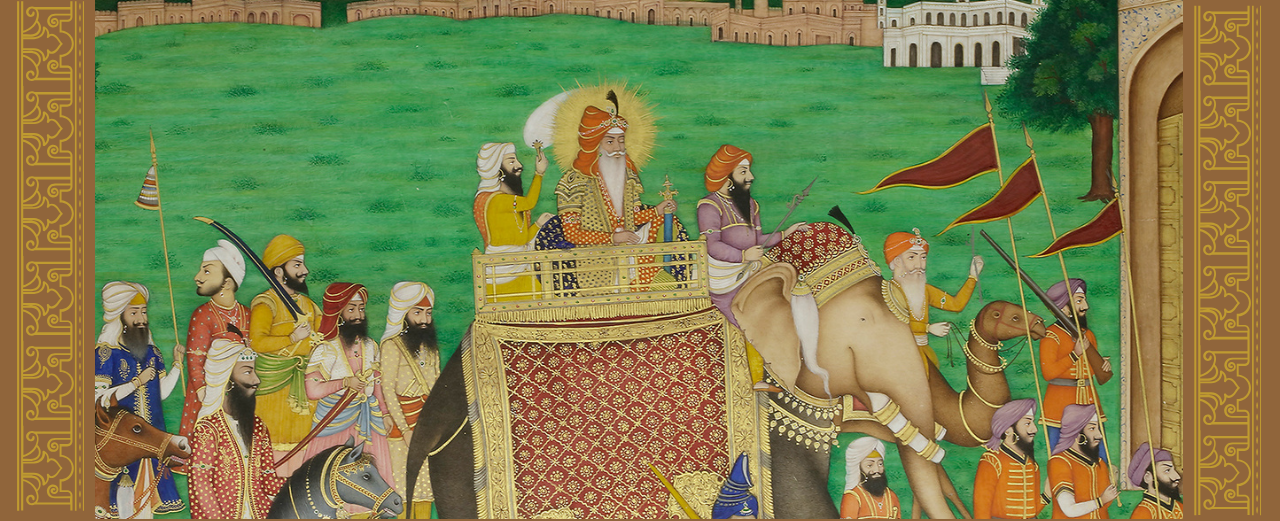
Maharaja Ranjit Singh
Maharaja Ranjit Singh was the founder and ruler of the Sikh kingdom of Punjab. His fearless resistance against invaders from the northwestern borders earned him the title Sher-e-Punjab — the Lion of Punjab. Many stories and folk tales from his life offer us a glimpse into his inner strength and the qualities that made him both powerful and deeply just.
One such story tells of an incident when a group of children were throwing stones at a berry tree to knock down fruit. Maharaja Ranjit Singh happened to be passing by when one of the stones accidentally struck him.
The guards immediately became furious. They caught the boys and brought them before the king.
The Maharaja calmly addressed them:
“Children, I had already lost one eye to smallpox in childhood. Today, the other might also have become an offering to the stone you threw. Tell me — what wrong have I done to deserve your stones?”
The Consequence
The children, trembling with fear, replied:
“Babaji, we did not throw the stone at you. We were aiming at the tree to get berries, but the stone accidentally hit you.”
By now, the parents had also gathered around. Everyone was worried. After all, this was no small matter — they had struck the most powerful man in the land.
The king signaled to one of his officers and asked him to bring a pouch of gold coins for the children.
Then he said:
“If a berry tree gives fruit when struck with stones, then I too must live up to the expectations of a king.”
The Practice of Patience
The story reminds us to watch the natural tendencies of the mind.
Water naturally flows downward; lifting it to a higher place requires effort. In the same way, it does not take much to offend the mind. It takes effort to practice goodness, but a small provocation can pull us back toward anger, envy, resentment, and vindictiveness.
The Dalai Lama points out:
Even if all the gods in the universe joined forces against you, if every living being became hostile toward you, they would not have the power to send you to hell. Disturbing emotions, on the other hand, can deliver you to hell in a single instant.
This is why disturbing emotions have been our enemy from beginningless time, harming and destroying us.
Farid Ji reminds us:
फरीदा बुरे दा भला करि गुसा मनि न हढाइ ॥ Fareed, respond to wrongdoing with goodness, and do not allow anger to settle in your mind.
देही रोगु न लगई पलै सभु किछु पाइ ॥ In this way, you remain free from inner suffering and gain what is truly valuable in life.
Farid Ji’s verse reminds us to become mindful of our reactions — not to be swayed by external events, but guided by an inner anchor.
Such a way of living protects us from the illnesses of both body and mind, and helps us preserve the treasures within: wisdom, peace, and clarity.
Nature Outside, Nature Inside
The story also points us toward the lessons nature quietly teaches us.
In the words of Bhai Gurdas:
A tree laden with fruit offers fruit even to the one who throws stones at it. Even when cut, it still gives wood.
Mountains are struck by stonecutters, yet they yield precious gems. Sugarcane is crushed, yet it gives sweet nectar.
In the same way, a virtuous person responds to wrongdoing with even greater virtue.
The wisdom reminds us not to forget our deeper nature. When kindness, cheerfulness, helpfulness, and forgiveness become habits, we are less disturbed by the actions of others.
This runs contrary to the common narrative that it is wise to be good only to the good, and naive to be good to a wrongdoer. But wisdom traditions remind us that true inner strength shines regardless of how dark the world outside may seem.
A Portrait of the “Awake”
The following verse from the Sukhmani Sahib offers a portrait of a mind grounded in truth:
ब्रहम गिआनी सदा निरदोख ॥ The God-conscious being remains untouched by vice,
जैसे सूरु सरब कउ सोख ॥ like the sun that dries up all moisture.
ब्रहम गिआनी कै दृसटि समानि ॥ The God-conscious being looks upon all alike,
जैसे राज रंक कउ लागै तुलि पवान ॥ like the wind that blows equally upon king and pauper.
ब्रहम गिआनी कै धीरजु एक ॥ The God-conscious being possesses steady inner poise,
जिउ बसुधा कोऊ खोदै कोऊ चंदन लेप ॥ like the earth, whether someone digs into it or applies sandalwood paste upon it.
ब्रहम गिआनी का इहै गुनाउ ॥ Such is the virtue of the God-conscious being.
नानक जिउ पावक का सहज सुभाउ ॥१॥ O Nanak, it is like the natural quality of fire.
Reflection question
What situations make it difficult for you to stay calm and kind? What helps you reconnect with your inner anchor?
Sources
Jaswant Singh Parwana, Bahie Padhie Paas
Guru Granth Sahib — translations based on the teekas of Sahib Singh Ji
The Joy of Living and Dying in Peace by Dalai Lama



Leave a Reply