

You may have come across two words that sound similar but differ greatly in meaning: Moha (मोह) and Prem (प्रेम). While Moha, or attachment, is considered one of the five primary vices, Prem, or love, is often a term used to describe the Divine itself. Where Moha leads to pain, Prem is seen as a path to peace. Moha distances one from the Divine, while Prem brings one closer.
Yet, there’s a surprising truth: without attachment, the seeds of love cannot sprout. Attachment, in a way, serves as the seed of love. Consider how a farmer manages his harvest. Some of the crop feeds the family, and any surplus is sold at the market. But a portion is always set aside as seeds for the next planting. If a farmer consumes even these seeds, he risks future harvests. When planted, a handful of seeds grows into an abundant crop that sustains the family and feeds others as well.
In this way, attachment is like consuming seeds that were meant to be planted. Love, on the other hand, is planting them, allowing them to multiply and nourish the world. Attachment is about concern for oneself and one’s family; love is the sprinkling of goodwill and compassion over all of humanity.
With attachment, we might even be willing to let others suffer if it safeguards someone or something dear to us. This attachment can occupy so much of our minds that it feels impossible to live without that person or thing—it’s like being under a spell. Even when the person or object causes pain, Moha holds on, unwilling to let go. Yet no one finds lasting happiness through the objects of their attachment.
Love, on the other hand, sees all as one: I am a part of the One, and so is everyone and everything else. If the Divine, others, and I are all connected, how can I wish well for a few at the expense of the rest?
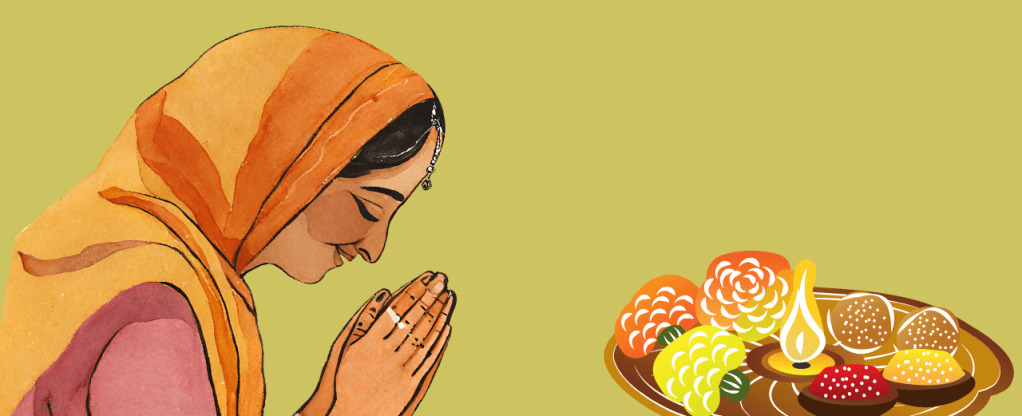
There is a beautiful tale of a mother who once visited a saint with an offering of prasad. She had come to express gratitude for his blessings, which she believed had protected her family. She recounted a lightning strike that had killed ten other buffaloes in her village, but her own buffalo survived. Later, a fire in the market destroyed fifty shops, yet her shop was unharmed.
The saint listened patiently, then asked, “Tell me – if all eleven buffaloes and fifty-one shops were yours, but only one buffalo and one shop survived, would you still bring prasad in gratitude?”
The mother looked confused. The saint continued, “If you had felt for the other buffaloes and shops, as if they were your own, love would have sprouted in your heart. But when you care only for your buffalo and your shop, that is Moha. Attachment says, ‘Let the whole village burn, as long as my house is safe.’ Love considers the entire village as family. Love for one’s family is a seed, but when it is planted and nurtured, it blooms into love for all, and the whole world becomes family.”
Moha says, ‘Let the whole village burn, as long as my house is safe.’
Love considers the entire village as family.
Moha, or attachment, is a vice because it holds us back from realizing our true potential. We are meant to blossom like trees, yet attachment keeps us content with consuming the seeds that should have been planted. We were destined to be an ocean, but we settle for remaining in a puddle. We were meant to shine like stars, to light up the world—yet we retreat within four walls and close the windows.
Attachment creates boundaries; love dissolves them. While attachment is natural, it is also the seed of something greater. When confined to oneself, attachment is like a bird in a cage. But when that love expands beyond personal boundaries, it sets the bird free—to spread its wings, to soar in the skies. To truly experience the joy of living.
Source
Translated and adapted from Do Divay Ik Joti by Giani Jaswant Singh Parwana
Reflection Questions
- Can you recall a recent experience when you set aside personal or family concerns to help someone else? What was your initial concern, and what did you discover through the experience?
- Have you ever been surprised by an unexpected act of love from someone? How did it make you feel?


 The Sabad Project - Wisdom stories
Leave a reply to nandanaraveendran23ug Cancel reply