
Seeds are for planting: Love is for spreading 

You may have come across two words that sound similar but differ greatly in meaning: Moha (मोह) and Prem (प्रेम). While Moha, or attachment, is considered one of the five primary vices, Prem, or love, is often a term used to describe the Divine itself. Where Moha leads to pain, Prem is seen as a path to peace. Moha distances one from the Divine, while Prem brings one closer.

Yet, there’s a surprising truth: without attachment, the seeds of love cannot sprout. Attachment, in a way, serves as the seed of love. Consider how a farmer manages his harvest. Some of the crop feeds the family, and any surplus is sold at the market. But a portion is always set aside as seeds for the next planting. If a farmer consumes even these seeds, he risks future harvests. When planted, a handful of seeds grows into an abundant crop that sustains the family and feeds others as well.

In this way, attachment is like consuming seeds that were meant to be planted. Love, on the other hand, is planting them, allowing them to multiply and nourish the world. Attachment is about concern for oneself and one’s family; love is the sprinkling of goodwill and compassion over all of humanity.

With attachment, we might even be willing to let others suffer if it safeguards someone or something dear to us. This attachment can occupy so much of our minds that it feels impossible to live without that person or thing—it’s like being under a spell. Even when the person or object causes pain, Moha holds on, unwilling to let go. Yet no one finds lasting happiness through the objects of their attachment.

Love, on the other hand, sees all as one: I am a part of the One, and so is everyone and everything else. If the Divine, others, and I are all connected, how can I wish well for a few at the expense of the rest?
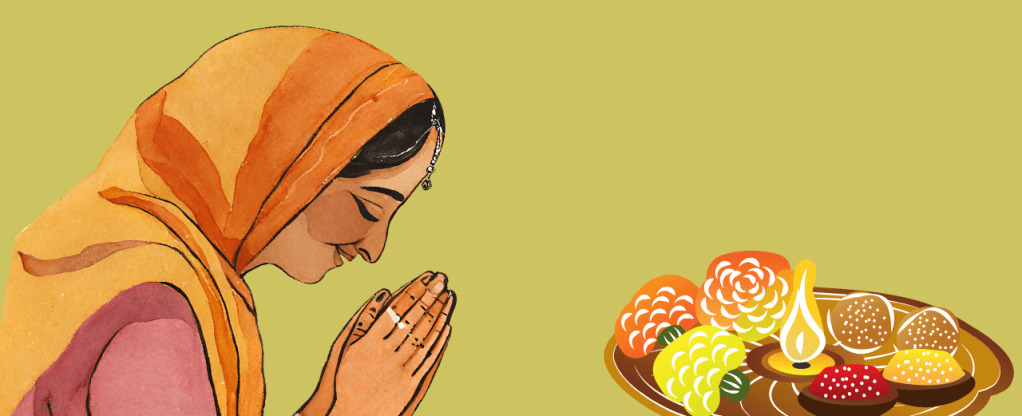
A lady offering prasad in gratitude

There is a beautiful tale of a mother who once visited a saint with an offering of prasad. She had come to express gratitude for his blessings, which she believed had protected her family. She recounted a lightning strike that had killed ten other buffaloes in her village, but her own buffalo survived. Later, a fire in the market destroyed fifty shops, yet her shop was unharmed.

The saint listened patiently, then asked, “Tell me – if all eleven buffaloes and fifty-one shops were yours, but only one buffalo and one shop survived, would you still bring prasad in gratitude?”

The mother looked confused. The saint continued, “If you had felt for the other buffaloes and shops, as if they were your own, love would have sprouted in your heart. But when you care only for your buffalo and your shop, that is Moha. Attachment says, ‘Let the whole village burn, as long as my house is safe.’ Love considers the entire village as family. Love for one’s family is a seed, but when it is planted and nurtured, it blooms into love for all, and the whole world becomes family.”

Moha says, ‘Let the whole village burn, as long as my house is safe.’
Love considers the entire village as family.

Moha, or attachment, is a vice because it holds us back from realizing our true potential. We are meant to blossom like trees, yet attachment keeps us content with consuming the seeds that should have been planted. We were destined to be an ocean, but we settle for remaining in a puddle. We were meant to shine like stars, to light up the world—yet we retreat within four walls and close the windows.

Attachment creates boundaries; love dissolves them. While attachment is natural, it is also the seed of something greater. When confined to oneself, attachment is like a bird in a cage. But when that love expands beyond personal boundaries, it sets the bird free—to spread its wings, to soar in the skies. To truly experience the joy of living.

Source

Translated and adapted from Do Divay Ik Joti by Giani Jaswant Singh Parwana

Reflection Questions

  1. Can you recall a recent experience when you set aside personal or family concerns to help someone else? What was your initial concern, and what did you discover through the experience?
  2. Have you ever been surprised by an unexpected act of love from someone? How did it make you feel?


Discover more from The Sabad Project – Wisdom stories

Subscribe to get the latest posts sent to your email.


Comments

6 responses to “Seeds are for planting: Love is for spreading ”

  1. One of the best explanations I have read on the difference between Moha and Prema or Attachment and Love in very simple , practical and easy to understand language.

    I also liked the example of the conversation between the village woman and the saint. Honestly most of us behave exactly like the village woman.

    Let us aim to overcome our attachments and pray to our God to covert them into love through his divine grace.

    Liked by 6 people

    1. That was exactly my first thought on reading the story. So much of our time and energy goes into securing our own wellbeing and that of our family and friends. Years of conditioning have reinforced our insecurities and narrowed our circle of concern.

      Often, when I feel the urge to help someone, imaginary fears of not having enough time or resources surface. Over the past few months, I’ve been experimenting with a simple question: Is there something I can do with just a small investment of time or emotion? I’m often surprised to find that a little empathy, a kind word, or a small effort can make a difference without disrupting my own balance.

      Even if I can’t do anything tangible to help, I’ve found that holding a quiet prayer in my heart for the person is also an act of kindness. It may bring a small measure of happiness to someone else, but what’s remarkable is how it begins to unlock your own heart

      Liked by 3 people

  2. “Without attachment, the seeds of love cannot sprout. Attachment, in a way, serves as the seed of love.”

    I found these words in the blog very enlightening. There is a common phrase in Tamil—”சேற்றில் மலர்ந்த செந்தாமரை,” which means “the lotus that blooms from the mud.” While mud may seem murky, it serves as the foundation upon which the lotus—a divine symbol in many spiritual traditions—blooms. This analogy applies well here: attachment can serve as the base from which love blossoms.

    In the context of the woman in the story, it is natural for her to feel relief when her possessions are spared from calamity. But rather than stopping there, she could use her attachment as a starting point to nurture love in her heart that extends beyond her usual scope. She might think along these lines: “My buffalo and my shop are very dear to me, and so are others’ possessions dear to them. I know the pain I would feel if I lost them; others are feeling that same pain. I may not be able to help everyone, but can I at least support one family by sharing the milk from my buffalo? Or can I help a shop owner who has lost everything, even in a small way?”

    Instead of labeling attachment as a vice, can we use our awareness to transform it into a virtue? Not simply because it is the “noble” thing to do, but because attachment that does not evolve into love can be limiting and, in the long run, bring pain to ourselves and others. Furthermore, labeling attachment or any other aspect of our mind as “good” or “bad” can lead to inner conflict, creating more problems instead of bringing us closer to experiencing the divine within.

    So, the next time we notice attachment in ourselves, simply acknowledging—“Yes, I have attachment. How can I transform it into love?”—can go a long way towards experiencing the true joy of living.

    Liked by 3 people

    1. Thank you, Uthra. The analogy of a lotus blooming in mud is truly beautiful. It reminds me of the venerable Thich Nhat Hanh’s book titled No Mud, No Lotus, which captures a similar idea in different words.

      Your thought experiment about how the woman in the story could extend her love for her buffaloes to her neighbor’s buffaloes is equally inspiring. It reflects the beauty of taking small, deliberate steps to expand our hearts—one thought at a time, one moment at a time. In this way, the love we naturally feel for our family and friends can serve as a training ground, a starting point from which we can gradually widen our circle of compassion.

      Liked by 1 person

  3. nandanaraveendran23ug Avatar
    nandanaraveendran23ug

    What a beautifully insightful piece! As a college student, I often find myself caught up in the hustle of academics and personal responsibilities, sometimes forgetting the importance of community and connection. The distinction between Moha and Prem really resonated with me. It’s so easy to fall into the trap of attachment, focusing solely on our own stresses and challenges.
    I recently had an experience where I chose to help a friend who was struggling with their coursework instead of just worrying about my own stuff. It reminded me that when we support each other, we not only lighten someone else’s load but also strengthen our bonds and create a more positive environment for everyone; prem over moha. The story about the mother and her buffaloes was particularly poignant. We usually think – “As long as I am okay, everything is going to be fine” – but this mindset limits our empathy for others. We should challenge ourselves to cultivate love over self attachment.

    Like

  4. Anbazhagan P Avatar
    Anbazhagan P

    Whenever I read this kind of message my mind goes to a message I read a few years ago. That message is : “No begger is ready to reject a luxurious life(even it is by unfair ways)and nobody those who live a luxurious life (attained by unfair ways) is ready to lose this life and donate to the needy persons!

    An empty cup cannot serve anyone, right. We need to be prospered and wealthy to spread love, help, right?

    Like

Leave a reply to jayanthg Cancel reply