

Sometimes, even when we are trying to walk on the right path, we continue to face problems.
We run into difficulties with people. Circumstances seem to tighten their grip. Old habits of the body and mind refuse to let go. At such times, faith begins to waver. We may feel doubt, disappointment, anger – sometimes we are on the edge of desperation.
A story from the life of Bhagat Sadhna gives us a peek into the life of a seeker. And how they navigate such situations. It is a story that carries a quiet lesson in hope, especially when circumstances feel unforgiving.
Reader alert: This story includes references to violence. Please read with care before sharing it with children or sensitive listeners.
Early life

Bhagat Sadhna lived in the Sindh province of undivided India. By profession, he was a butcher. He lived around the same time as Bhagat Namdev and was known to be deeply devoted, often spending time in the company of other seekers.
At some point, someone gave him a Saligram — a black stone revered as a sacred form of Vishnu. Sadhna ji began worshipping it with great love. He also used the Saligram to weigh meat, treating it as a constant reminder that the Divine was watching his every action. He must weigh honestly. He must not cheat anyone.
One day, a mendicant noticed this and objected.
“O Sadhna,” he said, “you weigh meat with a Saligram. This is disrespectful. Give it to me—I will worship it properly.”
Without protest, Sadhna ji handed it over.
That night, after bathing the Saligram and completing his rituals, the mendicant went to sleep. In the middle of the night, he heard a voice. The Saligram spoke:
“Why have you brought me here? I was happy with Sadhna. He is dear to me. Why have you separated me from my devotee?”
Shaken and filled with remorse, the sadhu returned the Saligram the next day. Sadhna ji received it with joy and immersed himself even more deeply in devotion—now convinced that the Divine truly watched over him at every moment.
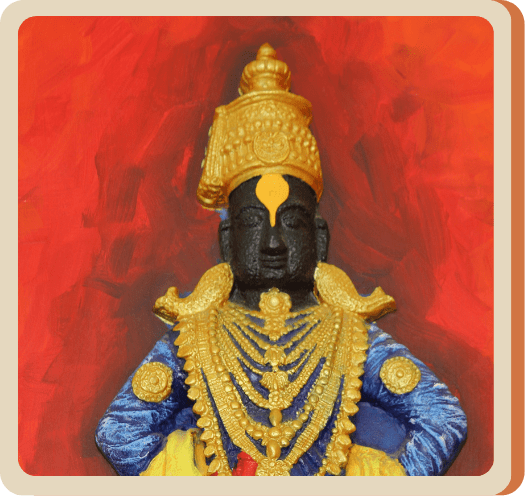
The turning point

Sadhna ji continued his profession. One evening, just as he was about to close his shop, the king’s agents arrived, demanding meat.
“I have sold everything,” Sadhna ji said.
“We only need one leg,” they insisted.
He thought to himself: If I slaughter the goat now, the meat will spoil by morning. Let me cut one leg and complete the rest tomorrow.
As he approached the animal with his knife, something unexpected happened.
The goat laughed.
“Come, Sadhna,” it said, “you are about to cut off my leg. I will groan in pain all night.”
Startled, Sadhna ji wondered, Is the animal speaking?
The voice continued:
“You will have to pay the price for this in your next life. This has been our cycle for many births. Many times, you have been the butcher and I the goat. Many times, you have been the goat and I the butcher. Today, you are beginning a new account — cutting my leg while I am alive.”
Something awakened within Sadhna ji. In that moment, he resolved to end this cycle of killing and being killed.

Much later
Years passed.
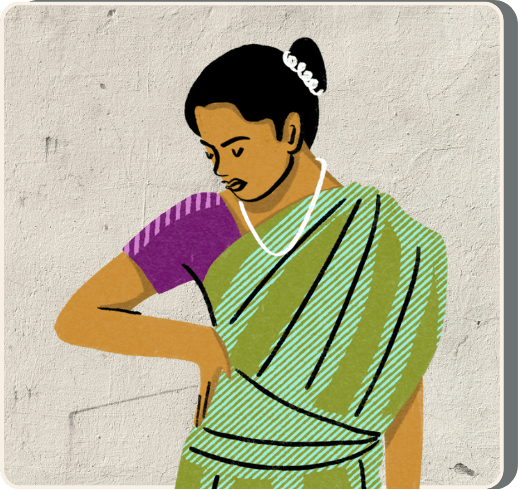
One day, while on pilgrimage, Sadhna ji walked through a village, his mind absorbed in remembrance of the Divine. As evening approached, a woman standing outside her home invited him in.
“You seem like a holy man. Please come — let me offer you food.”
He agreed and sat down to eat, his attention still inward. As she served the meal, she sat beside him and began fanning him. Gradually, she moved closer.
Sadhna ji felt uneasy.
“Please,” he said gently, “you are like a sister to me. Treat me as your brother.”
Turning away, he noticed her husband lying bedridden in the adjacent room. The woman caught his glance.
“Oh,” she said casually, “you hesitate because of him? He is as good as dead — he has been ill for years.”
Alarmed, Sadhna ji stood up. “This is not right. I must leave.”


In desperation, the woman killed her husband, believing this would remove all obstacles.
“Now there is nothing in our way,” she said. “Come with me. I will follow you wherever you go.”
Sadhna ji was shaken to the core. “What have you done? I cannot be part of this.” He fled the house — but the woman followed.
Realising her plan had failed, she began shouting, gathering the villagers.
“This man is no sadhu,” she cried. “He came into my house and misbehaved with me. When I protested, he killed my husband.”
The trouble deepens

The villagers, enraged by her account, handed Sadhna ji over to the king. He tried to explain, but the mob was not thinking. Hearing the charges, the king ordered a severe punishment:
“Brick him alive.”
Exhausted, broken, and stripped of hope, Sadhna ji began to pray.
Why this injustice? Why have You abandoned me? I have looked up only to You.
They say my karma is that of a butcher. But if even after turning towards You, that karma binds me—then who is more powerful?
He protests:
When will You liberate me? I do not want liberation after I die. Liberate me now.
नृप कंनिआ के कारनै इकु भइआ भेखधारी ॥ To win over the king’s daughter, someone disguised himself as Vishnu
कामारथी सुआरथी वा की पैज सवारी ॥१॥ He was driven by lust and selfish desire, yet You protected his honour.
तव गुन कहा जगत गुरा जउ करमु न नासै ॥ What is Your glory, O Guru of the world, if my past karma is not erased?
सिंघ सरन कत जाईऐ जउ जंबुकु ग्रासै ॥१॥ रहाउ ॥ What is the use of seeking refuge of the lion if one is to still fall prey to the jackal?
एक बूँद जल कारने चातृकु दुखु पावै ॥ Longing for a single drop of rain, the pied cuckoo suffers in pain.
प्रान गए सागरु मिलै फुनि कामि न आवै ॥२॥ If the bird dies, even oceans of rain will be of no use later.
प्रान जु थाके थिरु नही कैसे बिरमावउ ॥ Worn out by the struggle with my vices, my breath falters—how can I remain steady?
बूडि मूए नउका मिलै कहु काहि चढावउ ॥३॥ If I drown and die, and only then a boat arrives, how shall I climb aboard?

The turning point
By now, the bricks had risen to his eyes. Darkness surrounded him.

As he continued praying, Sadhna ji realised something profound: even now, his words carried pride. He was demanding justice, not mercy.
He understood that good deeds alone may never balance past actions. And so, his prayer changed.
मै नाही कछु हउ नही किछु आहि न मोरा ॥ I am nothing, I have nothing, I have no other support
अउसर लजा राखि लेहु सधना जनु तोरा ॥ This is the time—please preserve my honour; Sadhna is Your humble servant.
At that moment, a fierce dust storm arose. People ran for cover. The brick wall collapsed—and Sadhna ji emerged unharmed.
A lesson in hope
This prayer is preserved in the Guru Granth Sahib as the verse of Bhagat Sadhna (Ang 858). His words remain an immortal plea of hope.
They remind us that a seeker’s journey includes faith and doubt, surrender and protest, hope and hopelessness. We stumble. We question. We waver. And yet, like a compassionate mother, the Divine does not hold us to account for our failings.
This reminds the seeker to do karma, but to rest in kirpa—for grace has the power to loosen even the tightest knots of karma. Our refuge lies not in our merit, but in mercy, vast enough to cover the limits of our effort.

Reflection question
What helps you hold on to hope when life becomes very difficult?
References
- Sri Guru Granth Sahib, Ang 858
- Discourses by Sant Maskeen ji
- Discourses by Bhai Harbans Singh ji (Jagadhari Wale)
- SikhWiki — Sakhi of Bhagat Sadhna


 The Sabad Project - Wisdom stories
Leave a reply to kryptonitewildlycc3b55603f Cancel reply