
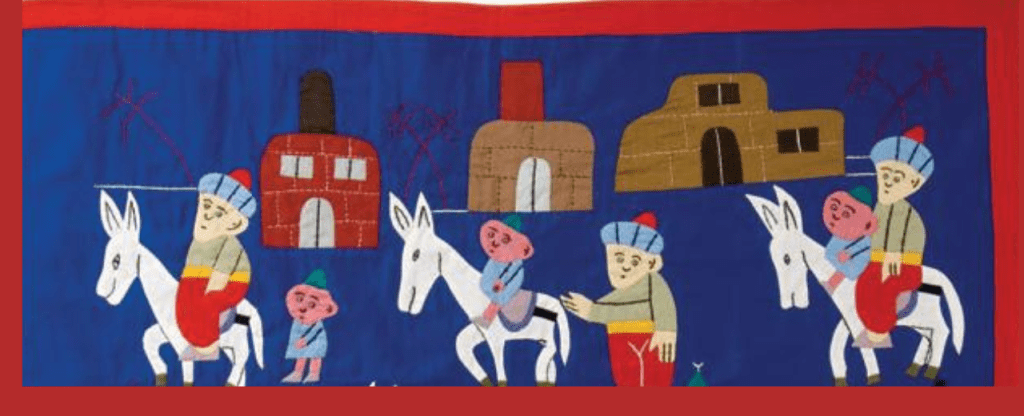
Do you ever lose your peace over what others say about you?
Sometimes we chase praise. Sometimes we fear criticism. Either way, the world’s opinions tug at our hearts — friends, family, colleagues, even strangers.
It can be about anything: your work, your clothes, the house you live in, what you read, where you travel. And slowly, without noticing, other people’s voices begin to drown out our own.
There is an old fable that we may have read as children — but it deserves a visit in our adult life too. Because it wipes the mist off the mirror of our heart, and reminds us what we know but forget.
Goha and His Donkey
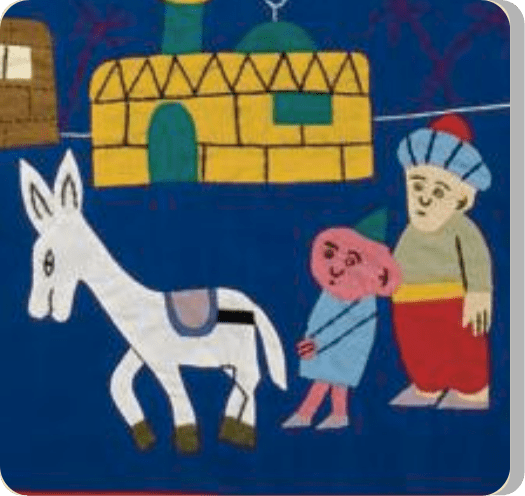
This folk tale appears across the world — in Aesop’s fables, in stories of Mulla Nasruddin, and in Egypt, where Goha is celebrated as the “wise fool” who reveals life’s truth through laughter.
One morning, Goha tells his son they will take their donkey to the market to sell it.
To keep the donkey fresh, they decide to walk beside it rather than ride.
Soon, a group of bystanders scoffs,
“How foolish — they are walking on foot when they have a donkey!”
Goha noticed his son’s anxious glance toward the bystanders.
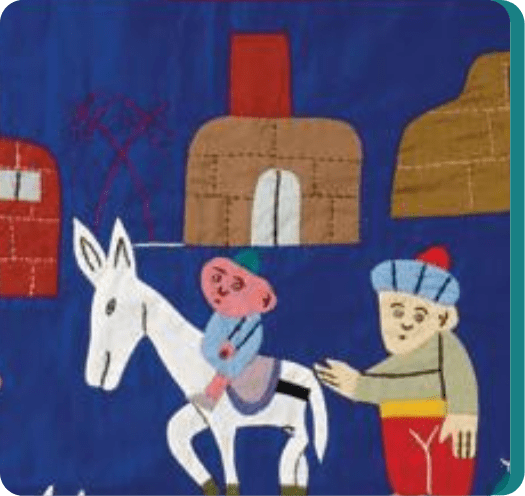
Gently, he patted his son’s shoulder and said, “Go ahead, my boy — you ride.”
The son climbed onto the donkey while Goha walked beside him. After some distance, they passed a group of people by the roadside. Seeing them, the people shook their heads and said,
“The world has gone mad. Look at this heartless boy — riding comfortably like a prince while his poor father walks in the scorching sun!”
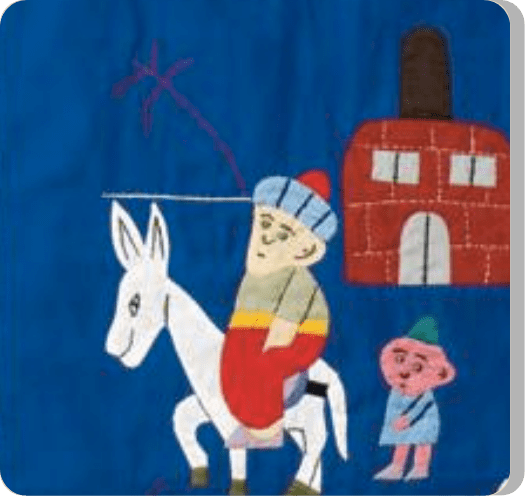
Goha looked at his son and said gently, “Alright, now you walk and I will sit.”
He climbed onto the donkey, thinking,
“Surely, this will keep everyone happy.”
Soon they crossed a group of women in the fields. The women stopped their work, shook their heads, and said,
“Look at this father — resting on the donkey while his son walks in the heat. How shameful!”
To please them, Goha and his son both climbed onto the donkey.
A little while later, they passed a tea stall. Some of the customers looked up and exclaimed,
“How cruel! This poor animal is carrying two people while they can walk on their own legs! Have some mercy — let the donkey rest!”
Goha and his son looked at each other, completely confused.
Everywhere they went, someone had a different opinion.
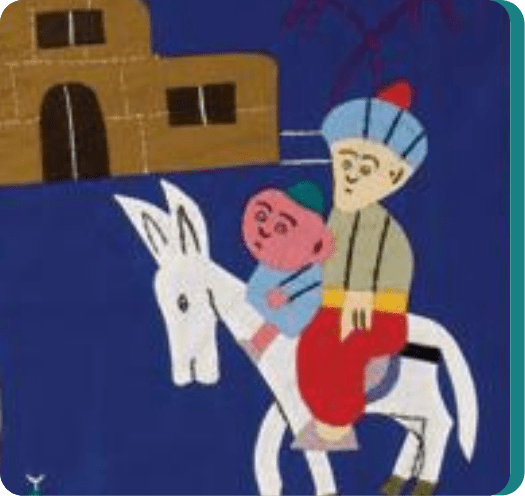
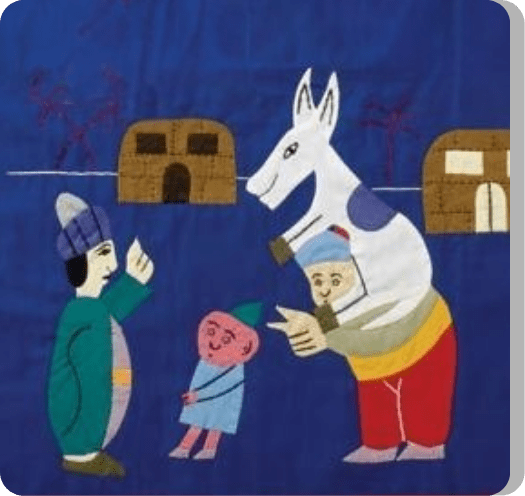
After thinking for a moment, they decided on a new plan. They decided to carry the donkey on their shoulders.
By the time they reached the edge of the town, a large crowd had gathered. People burst into laughter at the strange sight.
“Who is the real donkey here?” they joked.
“They are carrying what they were meant to ride!”
When We Start Carrying the Donkey
This story is timeless because it mirrors the pattern of our own minds. So often, we run after praise or hide from blame, letting the world’s opinions push and pull us. In trying to please others, we sometimes choose what brings approval rather than what brings peace. Little by little, the inner voice grows faint — not because it has disappeared, but because we have stopped listening.
Yet the guide within is never gone. The moment we turn inward, it is there — steady, quiet, wise.
This lesson echoes across wisdom traditions:
“They blame the silent, they blame the talkative, they blame one who speaks little.
There is no one who is not blamed.”
—Dhammapada
“Renounce both praise and blame; live in equipoise.
Says Nanak, this is a hard game — only a few understand by turning toward the Guru.”
Guru Granth Sahib

Bringing This Into Daily Life
Understanding this truth is one step; living it is the real journey. Our reflex to seek approval or fear judgment has been shaped over years, so shifting it takes gentle practice — noticing, pausing, and choosing differently each time.
Brahmakumari Sister Shivani offers a simple approach to handling criticism:
First, pause and return to yourself.
Breathe, anchor within, and remember your dignity and Divine nature.
Next, look at the feedback with clarity, not hurt.
If there is truth in it, receive it with grace and use it to grow.
And if it isn’t true, let it go peacefully.
Everyone speaks from their own conditioning. We don’t need to carry their opinions in our hearts.

With time, this practice helps us stay open yet steady — listening without losing ourselves, and acting from inner clarity rather than the pull of praise or fear of blame.
In your life’s mission, think clearly and stay the course;
Pursue your purpose with steady, quiet force.
Be unmoved by criticism, untouched by applause;
For truth is your compass — not the world’s passing laws.
— Adapted from Count Lucanor
Reflection question
Where in your life do other people’s opinions shake your peace? Where have you already learnt to stay firm on your path — choosing truth over external approval?
Sources
- Aesop’s Fables (via University of Pittsburgh Folklore Archive) — The Miller, His Son, and the Donkey
- Wikipedia — “The Miller, His Son and the Donkey”
- Library of Congress — folk tale archive: “The Miller, His Son and the Ass”
- Jenny Bowker — Postcards from Cairo (Goha storytelling tradition)
- Juan Manuel (1335), Count Lucanor; or The Fifty Pleasant Stories of Patronio
Translated into English by James York - Guru Granth Sahib, Ang 219
Image Credit
The Children’s Museum of Indianapolis — A Goha story cloth by Ahmed Yossery


 The Sabad Project - Wisdom stories
Leave a reply to Harmeet Chetan Sindhkar Cancel reply