
Is there someone you feel responsible for?
A child, a parent, your employees, or your community?
Our roles often involve providing for others — through money, care, or emotional support. Out of love, we even worry about their future: What will happen to them after me?
A story from the life of Shivaji Maharaj and his teacher, the sage Samarth Ramdas, carries a timeless reminder for anyone who serves others — the other side of responsibility.
The Fort and the King

Samarth Ramdas, the 17th-century philosopher-saint, was known as the spiritual guide of the Maratha ruler, Shivaji Maharaj.
One day, while a grand fort was being built at Samangad in Kolhapur, Shivaji took his teacher to see the work. The vastness of the site was awe-inspiring — hundreds of men toiled with hammers and chisels, while carts of stone and water moved tirelessly.
Pointing toward the workers, the king said, “Thousands are earning their livelihood because of this work.”
The teacher listened silently as they walked on.
After a while, the king gestured toward another group and added, “These people have been working here for months. Through this endeavor, their families too are being provided for.”
A benevolent ruler indeed — eager to ensure the welfare of his subjects. His heart swelled with pride and affection for them, as though they were his own children.
Ramdas listened quietly as his disciple spoke, watching him with the gentle eye of a teacher who knows when a new lesson must begin.

The Boulder and the Lesson
As they walked, the sage stopped near a large boulder. He examined it from all sides and then turned to the king.

“Can you ask one of your men to break this stone?”
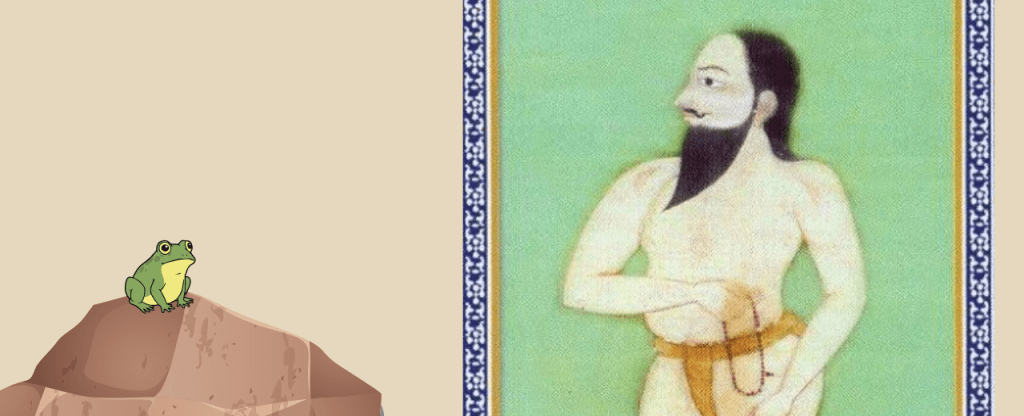
Shivaji, surprised but obedient, signaled to a workman. After a few strikes, the top layer broke open. Inside was a hollow pocket filled with a little water — and out leapt a tiny frog.
Ramdas smiled.
“O mighty king! Such is your greatness — even the frog within the heart of a rock finds sustenance under your care!”
Shivaji was startled. “But, Gurudev, how can I reach inside a rock? How could I care for that creature?”
The sage replied, “Is it not your glory?”
And then the king understood.
The One who gives water to a frog within a stone is the same One who nourishes all beings. We all are but instruments in the hands of the Sustainer. The moment we think ‘I am the doer’, ego quietly slips in and clouds our thinking.
The teacher who had once urged him to serve his people now showed him the deeper spirit in which to serve — with effort, but without pride.
Shivaji bowed deeply. Once again, his teacher had saved him — not from an outer battle, but from the subtle war within.
Wisdom from the Traditions
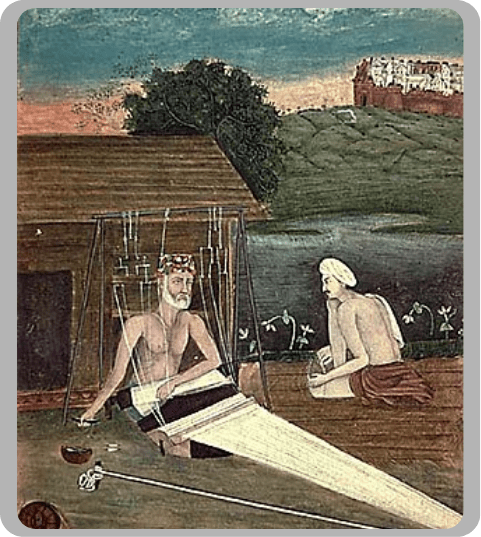
The same wisdom is found in the verses of Bhagat Kabir Ji, who reminds us to see through the illusion of doership:
हम कीआ हम करहगे हम मूरख गावार ॥
“I have done this, and I will do that” — how foolish am I to think so!
करणै वाला विसरिआ दूजै भाइ पिआरु ॥
Forgetting the True Doer, I fall in love with the illusion of control.
…
कबीर ना हम कीआ न करहिगे ना करि सकै सरीरु ॥
Kabeer, I have done nothing, nor will I ever do anything; this body itself can do nothing.
किआ जानउ किछु हरि कीआ भइओ कबीरु कबीरु ॥
I do not know what the Divine has done — yet the world cries, “Kabeer! Kabeer!”
Reflection
Is there a teaching or verse that helps you remember the Ultimate Doer in your daily actions?
References
- Discourse by Giani Pinderpal Singh Ji
- Bhavan’s Journal, Bharatiya Vidya Bhavan — Conversations between Swami Ramdas and Shivaji
- Verses of Bhagat Kabir Ji — Sri Guru Granth Sahib, Ang 39 and Ang 1367
- Athma Spiritual Bliss
- Medium: Samarth Ramdas – The Warrior Saint
Image Credits
- Samarth Ramdas Swami – Original painting by Meru Swami
- Portrait of Shivaji – Wikipedia
- Painting of Kabir weaving – Jaipur Central Museum, via Wikipedia


 The Sabad Project - Wisdom stories
Leave a reply to G Madan Mohan Cancel reply