
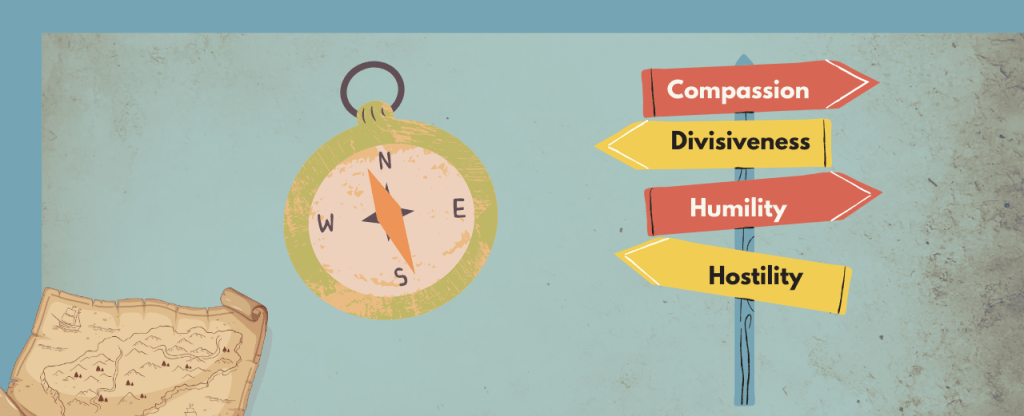
On the path of goodness—whether spirituality or social service—we often encounter a troubling question: Who is real, and who is fake?
Faith and morality have been misused so often that many people now doubt the entire field. Religious leaders are distrusted. Sacred texts are questioned. Even genuine seekers and teachers are viewed with suspicion.
Do you sometimes wonder: Is this leader trustworthy? Is this teaching authentic—or just another distortion for personal gain?
Because real diamonds are valuable, fake diamonds exist. In the same way, false teachers exist because wisdom itself carries immeasurable worth. Our challenge is to discern between the authentic and the counterfeit. Especially when voices justify taking the lives or freedom of the “other” to protect the “own.”
So how do we test the truth?
Who is the real mother?
There is a famous story in the Old Testament about two women who lived in the same house. Both had infants of the same age. One of the children died, and a dispute broke out over the surviving child. Each woman claimed the child was hers.
They brought the case before King Solomon. He listened to both of them carefully. But since there were no witnesses, the truth seemed impossible to establish.
Finally, Solomon gave a shocking command: “Cut the child in two. Each woman will receive half.”
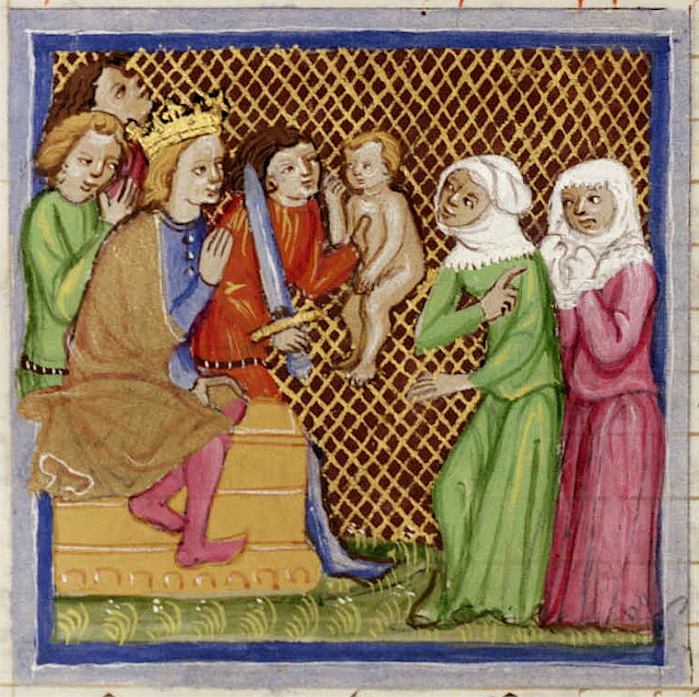
The woman who was holding the child in her arms agreed: “If I can’t have him, then neither should she.” The other cried out: “Please, don’t kill him. Let her take the child, but let him live.”
At once, the truth was revealed. Solomon declared the second woman the real mother. For no true mother would see her child harmed. She was willing to let him go if it meant he could live. The first woman, by contrast, was concerned only with her claim, not the child’s life.
Echoes in the Jataka Tales
A similar story appears in the Jataka tales of the Buddha’s past lives. But here, the rival woman is not human at all—she is a goblin disguised as a mother, eager to devour the child.
A wise sage is asked to decide. He draws a line on the ground and places the child in the middle. “Stand on opposite sides,” he instructs. “One of you hold his arms, the other his legs. Pull the child toward you. Whoever succeeds will have him.”
The child shrieks in pain as both women pull. The goblin pulls harder, unmoved by the child’s cries. But the real mother lets go at once. Her love will not allow her son to be torn apart.
The sage immediately declares her the true mother. For the goblin sought to possess—even at the cost of life. The mother sought only to protect life, even if it meant losing her son.
A Test for Today – Public Life
In public life—whether religion or politics —we face the same dilemma. Competing claims. Endless counterclaims. Complex histories of action and reaction. Louder voices and craftier campaigns often overpower the truth. So how do we assess – Who is right? Who is wrong?
Facts are not always clear. And situations can become complex. But Solomon’s test still holds: Does this action protect life, or destroy it?
That simple question can help us avoid many decisions that look like “justice” but, in reality, kill the child—or hand it to those who only wish to devour it for self-interest.
Most traditions agree: we are children of one Creator—whether we call that Source God, Allah, Waheguru, or Paramatma. If God is our Father or Mother, then all humans are siblings.
No true parent would sanction the mistreatment or killing of their children. To act with discrimination and violence in the name of God is to deny the very foundation of faith.
Choosing your teachers and co-travelers
This test applies equally to those we walk with on the spiritual journey. We may meet priests, teachers, or speakers who talk of God, but do so while othering, slandering, or claiming superiority.
The virtues of the Divine—compassion, forgiveness, generosity—are our destination. If our path fills us instead with contempt, pride, or hostility, it is worth stopping to ask: Am I walking in the light, or heading into a well?
Kabir puts it sharply:
If a blind man falls into a well, we can sympathize.
But if a man carrying a lamp walks into the well, there is no sympathy.
The blind are those who do not know. The lamp-bearers are those who claim to know. The danger is greater when wisdom is misused.
Where superiority, hostility, division appear, it is wise to pause. For not all who carry the lamp are leading us toward the light.
Compassion. Contentment. Restraint. Truth. These are the marks of authenticity on the spiritual path – to guide us in our choices, decisions and actions.
Reflection Question
Where have you seen faith lived as compassion—across the lines of caste, creed, or community?
References
- Judgment of Solomon — Wikipedia
- The Jataka, Vol. VI, translated by E. B. Cowell and W. H. D. Rouse (1907), at sacred-texts.com
Image credit
- King Solomon delivers judgment in a dispute between two women over a child, from the Olomouc Bible, Part I, folio 148v (Bible olomoucká, I. díl, 1417).

 The Sabad Project - Wisdom stories
Leave a reply to Harmeet Sindhkar Cancel reply