
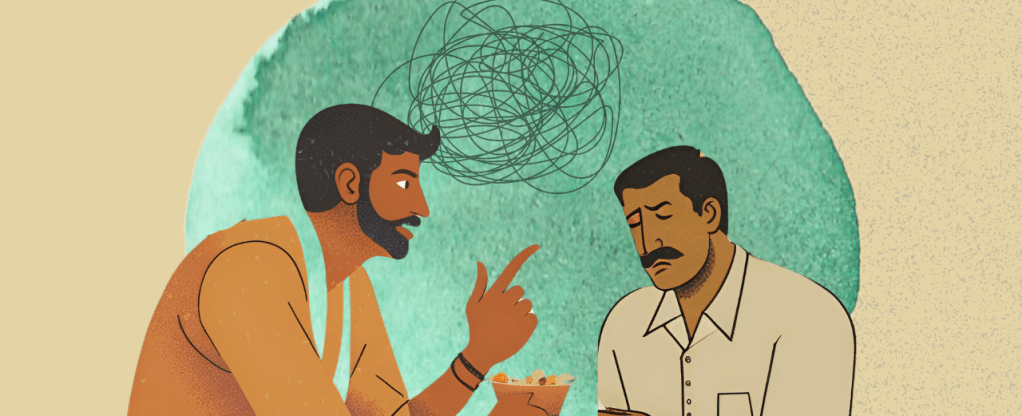
Have you ever heard someone say, “I’ve done so much for my family,” or “I’ve sacrificed so much for them,” only to feel unappreciated when their efforts aren’t reciprocated? It’s a common sentiment, but what if we looked at it from a different perspective? The story below may shift the way we think about giving and receiving.
The Burden of a Favor
Ranka was a small farmer, growing vegetables on a modest patch of land to support his family. Life had never been easy, but he managed to get by — until disaster struck. First came the drought, then the unseasonal rains. Three years of failed crops left him drowning in debt and despair. He had knocked on every door seeking help. But when all his efforts proved futile, he lost hope.
One evening, Ranka walked far beyond his village, to the outskirts of town. He found a sturdy tree, tied a rope to a branch, and prepared to end his suffering.
Just as he was about to put the noose around his neck, a voice called out. It was Jeeva, an old acquaintance who had recognized him from a distance. Jeeva ran to him, pulled him down, and threw the noose away.
“Ranka! What are you doing?” Jeeva cried.
Ranka broke down and poured out his sorrows. Jeeva listened patiently and consoled him. “You are not alone in this,” he said. “Many of us are struggling, but ending your life is not the answer. We can support each other. Let’s find a way forward together.”
With Jeeva’s encouragement, Ranka felt a glimmer of hope. He agreed to return home.
But as the days passed, a new burden took shape.
Jeeva made it a habit to remind Ranka — again and again — of how he had saved his life. Every time they met with friends, Jeeva would bring up the incident, retelling the story as if he had single-handedly rescued Ranka from the jaws of death.
At first, Ranka tolerated it. But soon, he grew weary.
One day, he took Jeeva back to the same tree. He tied a rope to the same branch and said, “My friend, let’s settle this once and for all. Either put the noose around your own neck so I can save you, or put it back around mine as it was that day. Let fate decide what happens next.”
Jeeva was stunned.
Ranka continued, “I was once ready to die because of my circumstances. But today, it is you who has brought me back to the edge of death. I would rather die once than be reminded of my helplessness every single day. The weight of your favor is heavier than my suffering.”
Jeeva finally understood.
Giving Without Keeping Count
Helping someone is a noble act. But when we repeatedly remind others of the favors we have done for them, what was once kindness becomes a burden.
A candle loses nothing by lighting another candle. The flame does not belong to the candle — it was passed on by another. The same is true for kindness, wisdom, and virtue. What we have received, we must pass forward with humility and joy.
Even the love and care we give to our families, friends, and communities should be free from the expectation of acknowledgment. When we keep a ledger of our good deeds, they lose their essence. But when we offer them with love — without attachment, without seeking returns — the universe keeps the records for us. And it always returns what we give, in ways beyond our imagination.
So let’s give freely. And let our kindness be like a candle — one that lights another, without losing its own light.
References
Jaswant Singh Parwana, Do Divay Ik Joti
Reflection question
Can you recount an experience where you were able to help someone without any expectations?


 The Sabad Project - Wisdom stories
Leave a reply to The Sabad Project Cancel reply