
Have you noticed how someone else’s negative behaviour can affect us?

When we experience something hurtful, disrespectful, or unpleasant, it can impact not just that moment, but also how we feel for the rest of the day – and how we respond to others.
Often, it slips into a pattern:
You shout, I shout louder.
You are unkind, I withdraw.
You hurt me, I respond in the same way.
Before we know it, a cycle begins.
Here is a story that invites us to pause — and look at what is truly in our hands.
The monk in the Himalayas
There is a story about a monk who lived in the Himalayas. He was known to be wise, and people believed he could even read minds.
One day, a group of boys decided to test him. They caught a butterfly and hid it in their hands. Their plan was simple:
They would ask the monk whether the butterfly in their hands was alive or dead.
If he said it was alive, they would crush it.
If he said it was dead, they would release it.
Either way, they believed they could prove him wrong.
The monk’s reply
The boys went to the monk’s hut and asked,
“Can you tell us what is in our hands—is it dead or alive?”
The monk looked at them and replied,
“What is in your hands… is your future.”
The boys were stunned. Slowly, they opened their hands—and let the butterfly fly away.
A lesson for conflicts
When we feel hurt in a conflict, anger often arises. We may try to get even—through words, actions, silence, or withdrawal.
What follows is often more hurt, more anger. And before we know it, a cycle begins.
The story invites us to reflect on a simple but powerful distinction:
- What is not in our hands: what others do
- What is in our hands: how we respond—how we think, feel, and act
Our life journey is determined by these choices.
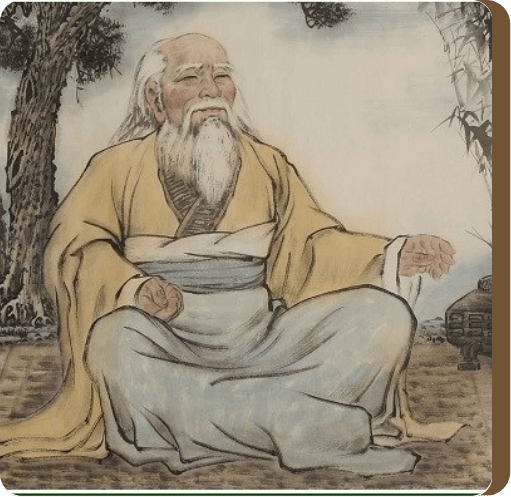
“Watch your thoughts, they become your words;
watch your words, they become your actions;
watch your actions, they become your habits;
watch your habits, they become your character;
watch your character, it becomes your destiny.”
— Lao Tzu
Shifting our responses
BK Sister Shivani offers some glimpses of how this wisdom can be lived in our day-to-day interactions.
When someone is rude, angry, or unkind, we still have a choice.
We can respond with kindness.
We can pause and ask what may be troubling them.
We can give space instead of reacting immediately.
Here are some shifts in our thinking that can help us break out of the cycle of reaction.
“I get affected by others’ behaviour” → Returning to our inner anchor
Others’ behaviour can affect us — but only if we lose connection with our inner state.
Like wearing a mask for protection, we can learn to pause, step back, and return to our inner strengths—peace, clarity, compassion.
Especially in close relationships, we may feel: “If I am not receiving kindness, how can I offer it?”
But kindness does not come from the other person. Its source lies within us.
You are not a drop in the ocean, you are the entire ocean in a drop. – Rumi
“Fairness means tit-for-tat” → Choosing who we become
We often feel fairness demands that we respond in the same way we are treated.
But what we give shapes who we become.
Each time we choose patience, clarity, or kindness, we strengthen those qualities within ourselves.
The wisdom of karma reminds us: our life is shaped not only by what happens to us, but by how we respond to it.
Don’t treat people as bad as they are; treat them as good as you are. – Mother Teresa
“They are doing this to me” → Seeing the larger picture
It is natural to feel that others’ actions are directed at us.
But each person carries their own history, struggles, and patterns.
Often, their behaviour reflects their inner state more than our worth.
Seeing this allows us to have compassion for the struggles of others.
If you treat people as they are, they will become worse. If you treat them as they could be, they will become better. – Goethe
Reflection
Which of your inner strengths can you hold on to, even when the situation around you is difficult? — for example, staying calm in the face of anger, or remaining hopeful amidst pessimism.
 The Sabad Project - Wisdom stories
Leave a comment