

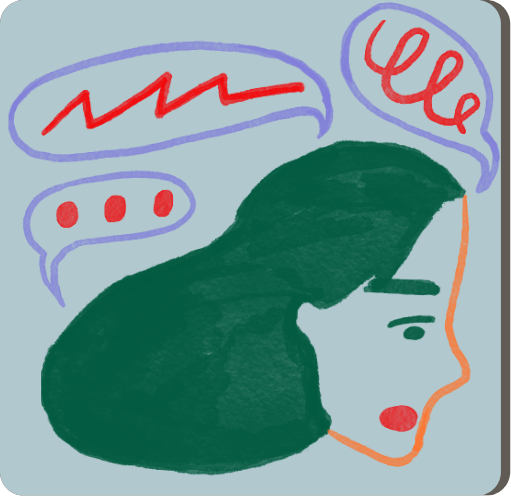
When you are about to embark on an important task — what is the dialogue going on inside your mind?
- “I can do this. I enjoy it.”
- “It might not work — but I have to do it.”
- “Others seem to do it so easily… I wonder if I ever can.”
- “If I don’t get this right, I’ll be in real trouble.”
- “What will others think of me?”
Our success and happiness depend on our actions. But does it really matter what we believe or say in our head? Aren’t they just words?
The following gatha offers an insight that can be life-changing.
The Teacher Who Never Fell Sick
There was once a teacher in charge of a class of thirty children. He was strict by nature — very old school. A disciplinarian. He ensured that children completed their classwork and homework regularly.
One day, the children were in no mood to study. They began whispering among themselves:
“Let us find a way to get the class dismissed today — so that we can play.”
“But how?” one child sighed. “The teacher never takes leave. He never even falls sick. He doesn’t even get a fever!”
I have an idea!

“I have an idea!” another child said, a twinkle in his eyes.
“We can give the teacher a fever.”
“Do you have medicine that induces fever?” someone asked.
“Not medicine,” he replied. “A method. Do as I say, and our job will be done.”
They appointed him their leader and followed his instructions.
The Chain of Questions
First, a student went into the teacher’s room, which was a few steps away from the classroom. He greeted him and asked,
“Sir, what is the matter? Why are your eyes looking red?
Did you not sleep well last night? Or are you unwell?”
“There is nothing of that sort,” the teacher replied. “I am absolutely alright. Has everyone arrived?”
“Yes, Sir. Everyone is in the classroom.”

“Go ahead. I will be there shortly.”
As the teacher stepped out of his room, another student approached him.
“What is the matter, Sir? Why are you walking like that today? You don’t look well.”
“I am fine,” the teacher said, and continued walking toward the classroom.
In the classroom
As he entered the classroom, another child asked: “Sir, why are your hands shaking? What has happened to your face?”
Now the teacher began to doubt himself.
“I… I am fine,” he said in a softer tone.
A student pulled a chair forward. “Sir, you seem to have a fever!”
The teacher hesitated. “Yes… perhaps I have not been feeling well since last night.”
“Should I call a doctor?” another student asked.
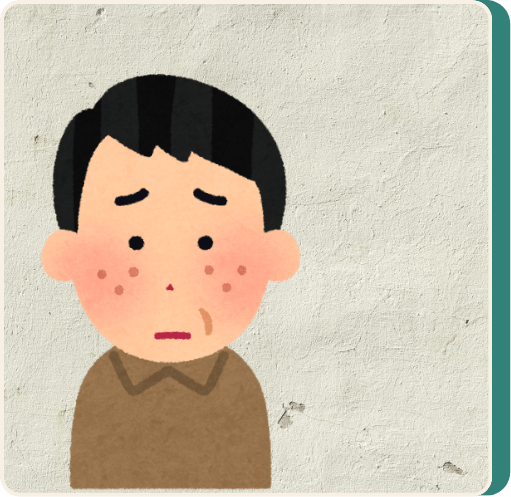
“No,” the teacher said. “Please sit and study. I will rest in my room.” He returned to his room and lay down.
The students were disappointed. “All that effort wasted. We still have to study!”
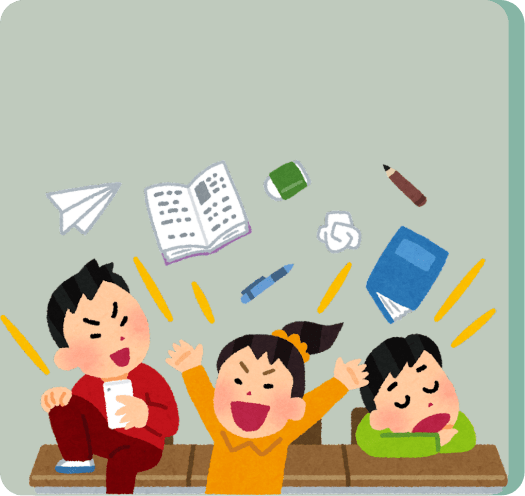
Their leader smiled. “Don’t worry. We are close.”
They began reading very loudly — deliberately creating a racket. The teacher, unable to rest in the adjacent room, grew increasingly uncomfortable.
Finally, he returned to the classroom and groaned: “Don’t give me a headache. Take the day off and let me rest.”
The children kept straight faces and quietly walked out of the class. But the moment they crossed the gate, they burst into laughter and ran off to play.
Wisdom for Life
This is the power of repeated words. Even a lie repeated often enough can begin to feel like the truth.
We hear limiting statements about our capabilities or circumstances. Gradually, we internalise them:
- I am not capable of ____.
- It is hard to maintain relationships.
- It is not possible to be honest and successful at the same time.

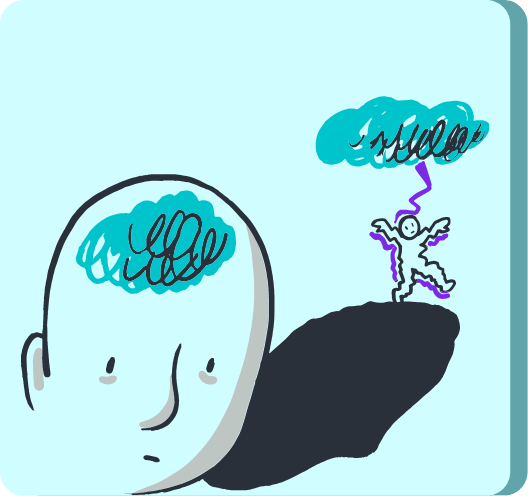
At first, they may come from outside. But the real impact begins when we start repeating them to ourselves. Someone may say, “This is no good,” once. But the wound deepens because we replay it in our mind again and again.
The company we keep matters. The opinions we accept matter. But what matters most is the voice in our own head — because that voice stays with us all day.
The science behind this
Neuroscience shows that the more we repeat a thought, the stronger its neural pathway becomes. Like habits of the body, these become habits of the mind.
The good news is that while this works for negative beliefs, the same phenomenon can help us cultivate a more optimistic outlook.
Repeated negative words can make us feel smaller and more constrained.
Repeated constructive thoughts can build confidence, clarity, and resilience.
Small internal shifts lead to small wins. Small wins build momentum.
And momentum moves us steadily toward our goals.
A Practice You Can Try
Marisa Peer offers a simple reminder:
Your mind is always listening to every word you say to yourself —
taking it in, believing it, and acting upon it.
It doesn’t argue — it obeys.
So speak to yourself the way you would speak to someone you truly love —
with kindness, patience, and encouragement.
When you change your inner dialogue, you change how you feel, how you show up, and the life you create.
Reflection
- Have you experienced a time when an optimistic or positive mindset helped you handle a situation more effectively?
- Is there something you often tell yourself that you would like to change — shifting from self-criticism or anxiety toward encouragement and optimism?
Reference
Jaswant Singh Parwana. Bahie Padhiye Paas.
Image credit
Wikimedia, Painting by Mikalojus Konstantinas Čiurlionis.

Collective Reflections
Over time, reflections emerge through our blogs, workshops, and community gatherings. We gather a few of these voices here anonymously as part of our shared contemplation.
- Thank you for sharing this very interesting piece. It is such a coincidence that I was talking about this very same subject in my organizational behavior class yesterday on the theme of positive organizational behavior. It addressed the power of cultivating positive thinking, which includes Hope, resilience, and the expectation that there will be a positive outcome. We become what we think!
- It’s true the power of the word/words repetition transform into quick action. To build positive vibes, one can repeat the mantra and enjoy the benefit of repetition.
- We are what we behold. It’s like the snake eating its tail. We become what we see and it influences our internal dialogue. If we see/listen/talk positively we also have a positive internal dialogue. This in turn helps us hope and look forward to things. And we become that.

 The Sabad Project - Wisdom stories
Leave a comment