
Have you noticed that some of our relationships have more ups and downs than we would like?
Conflicts may arise from differences in expectations, values, personalities, or communication styles. When hurt accumulates over time, it becomes harder to soften our stance or step out of the ‘deadlock’. Unresolved tensions not only strain relationships; they also leave us feeling stressed, heavy, or emotionally drained.
Is there a way out of such deadlocks?
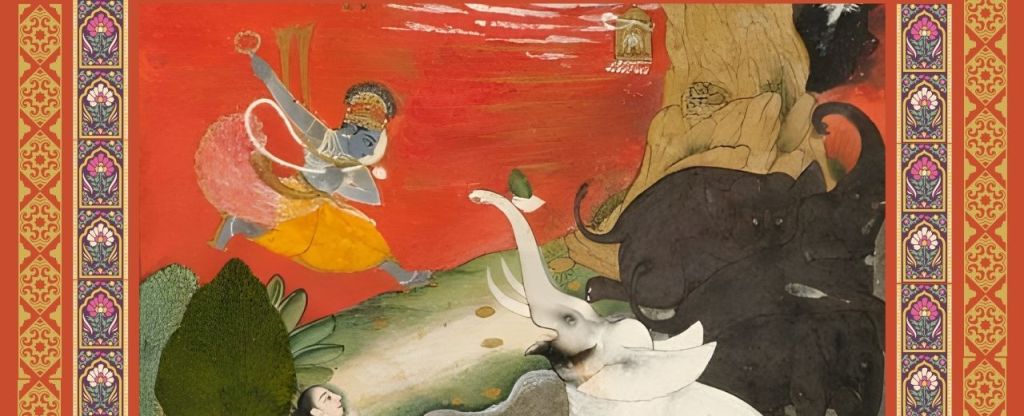
A story from the Srimad Bhagavatam — the struggle of the Elephant King with a crocodile — offers an ode of hope in the middle of despair.
The Elephant King

The story unfolds in the mountains of Trikuta, described as a lush paradise of clear lakes, flowing rivers, orchards, and dense forests. A mighty elephant named Gajendra lives here with his herd.
He is immensely powerful and feared by other animals, who keep their distance when he passes with his family.
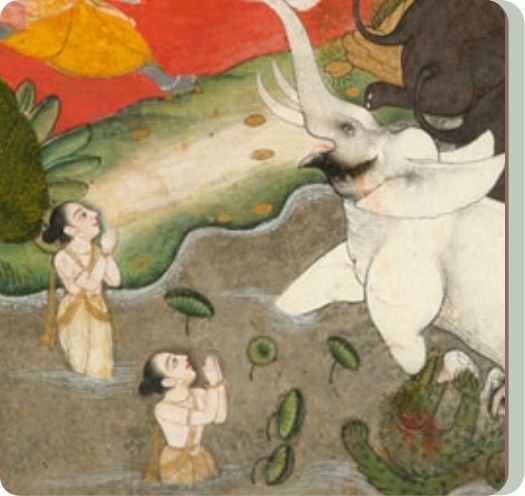
One day, Gajendra and his herd wander into a lake to enjoy its cool, sweet water. They splash about joyfully, spraying water on one another.
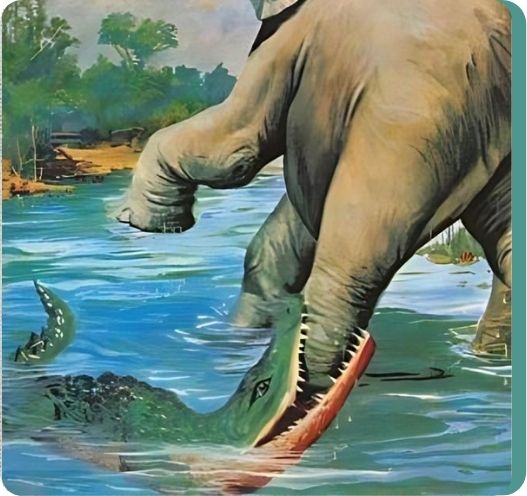
Suddenly, Gajendra feels his leg being pulled under the water. He jerks back, but is dragged again. A giant crocodile has caught his leg.
The Struggle
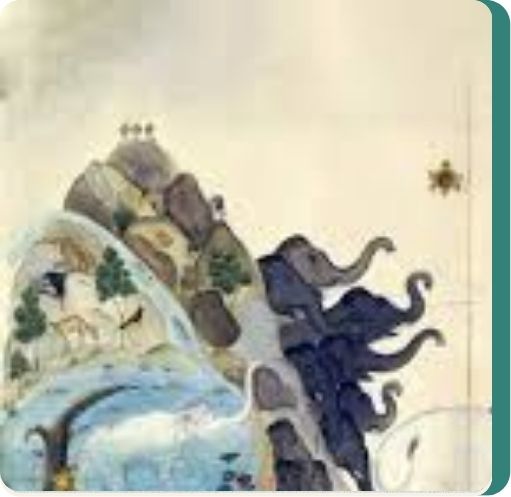
The herd panics. The elephants try to help, but the crocodile is strong. Being a land animal, Gajendra is at a disadvantage in the water.
He struggles desperately. At times he manages to drag himself partly out of the lake, but the crocodile does not loosen its grip and pulls him back in.
The struggle continues for a thousand years.
When all their efforts fail, the herd slowly withdraws, sensing that the end is near. Bleeding and in immense pain, Gajendra feels his strength waning. The enemy is overpowering, and there is no one left to support him.
Seeking Refuge
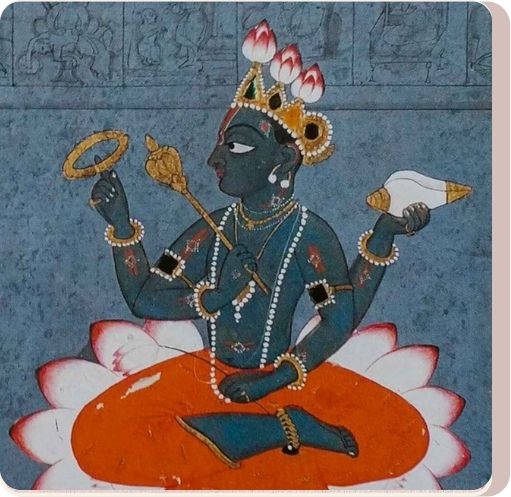
In that moment of utter helplessness, Gajendra realises that neither his own strength nor the power of his herd can save him.
He remembers what he had once contemplated in a previous lifetime.
Looking up, he turns to the Divine:
You alone are my refuge.
You alone are my saviour.
I am in danger. Please save me.
The One beyond form, beyond time—the ultimate Creator.
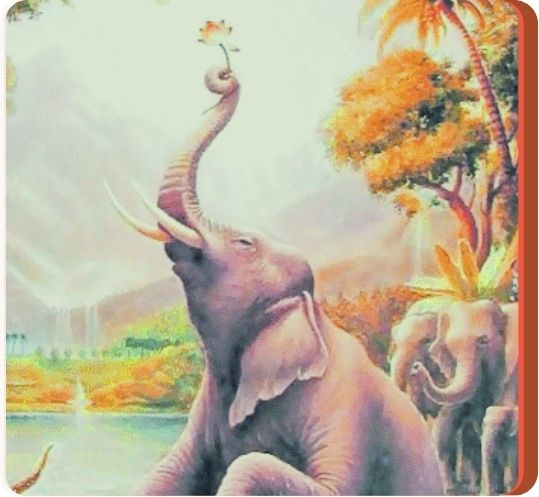
Seeing a lotus floating on the water, he lifts it in his trunk and offers it as his prayer.
Deliverance
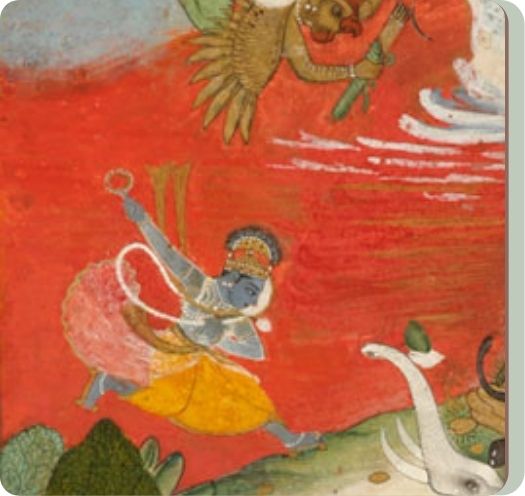
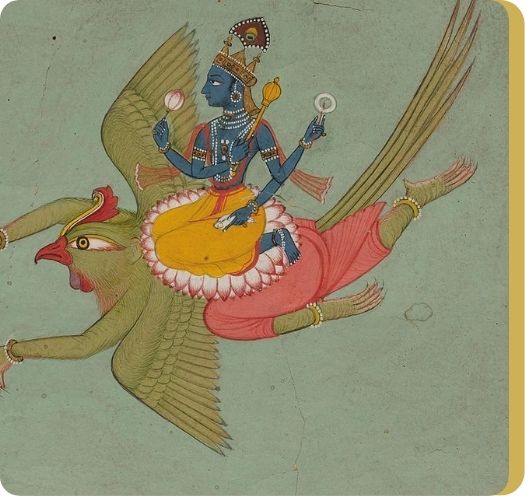
Moved by the desperate plea of his devotee, Bhagwan Vishnu descends on His vehicle, Garuda.
He rushes to the lake, chakra in hand, and strikes the crocodile. The crocodile is killed, and Gajendra is freed.
The long ordeal ends for the Elephant King who is overwhelmed with gratitude, He bows before Vishnu and offers the lotus at His feet.
This prayer—later known as the Gajendra Stotram—is included as the opening hymn of the Vishnu Sahasranama (the thousand names of Vishnu). It expresses a soul’s longing to overcome the cycle of desires and pain arising from ignorance, and return to its Source.
The Backstory – King Indrayumna
There is a deeper layer to this episode.
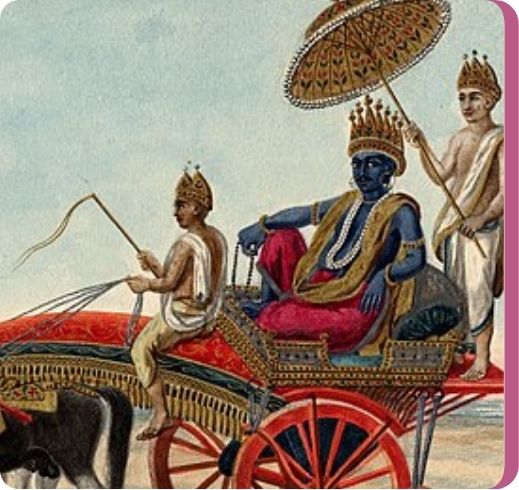
In a previous birth, Gajendra was King Indradyumna. He renounced his kingdom to meditate upon Vishnu, but pride still lingered in his heart.
When the sage Agastya visited him, the king failed to show due respect, thinking, “I am an ascetic too—why should I bow to another ascetic?”
The sage saw that the king was sincere in his spiritual efforts, yet still bound by pride. He said: “O King, in your next birth you shall become an elephant — an animal known for its pride.”
Realising his mistake, the king repented and begged for forgiveness. The sage then softened his words: “At the end of that birth, Vishnu Himself will rescue you from the cycle of birth and death.”
And so, Indradyumna was reborn as Gajendra.
The Backstory – King Huhu
The crocodile, too, had a past. He was once a Gandharva king named Huhu. One day, while the sage Devala was praying in a river, Huhu playfully pulled his leg from under the water. Startled and angered, the sage cursed him to be born as a crocodile.
When Huhu repented, the sage softened the curse: “When you clutch the feet of a great devotee of Vishnu, you will be freed and return to your original form.”
These curses are not mere flashes of anger. They point to a deeper law of cause and effect.
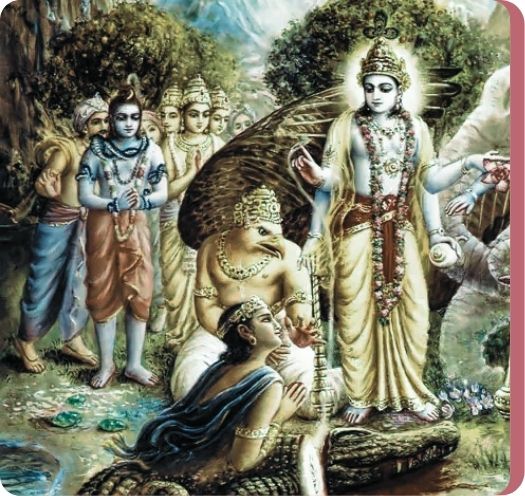
Rebirth here is not simply punishment, but part of the soul’s long journey—learning, maturing, and slowly remembering its true nature.
The Tussle in Our Relationships
While this story carries deep spiritual meaning, its wisdom also speaks to our everyday struggles—especially in our relationships.
We often become deeply attached: to how others should behave, to what they should give us, to the role they should play in our happiness. When these expectations are not met, conflict begins.
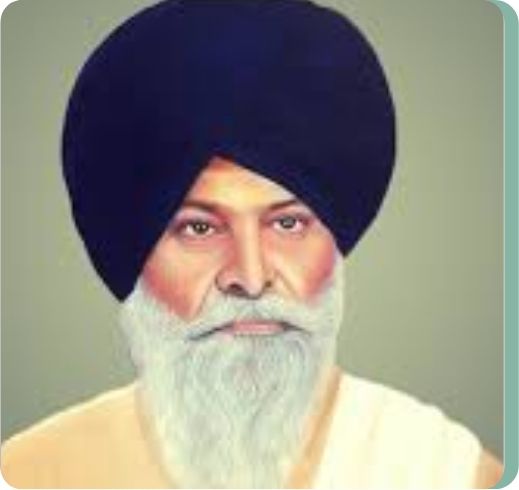
As Sant Maskeen ji points out:
Get rid of the illusion that you are seeking a wife—you are seeking happiness.
Get rid of the illusion that you are seeking a child—you are seeking happiness.
When a relationship becomes a source of pain instead of joy, it starts to feel like a burden.
For that matter, when life itself feels like a chain of suffering, one may wish to escape life.
Without the right guidance, it leaves us in a downward spiral. With the guidance of the Guru, one begins to look up. To rise above the cycle.
The story of Gajendra also shows us what keeps our struggles alive: the things we cling to.
- The idea of “I am…”—our identity, our achievements, our strength.
- Our belief that others are the source of our happiness, or the cause of our suffering.
As long as we hold on to these, we remain trapped in the same muddy waters as Gajendra—struggling with the crocodile and draining ourselves.
His story gently reminds us to seek refuge elsewhere: in the deeper Source within.

Releasing ourselves
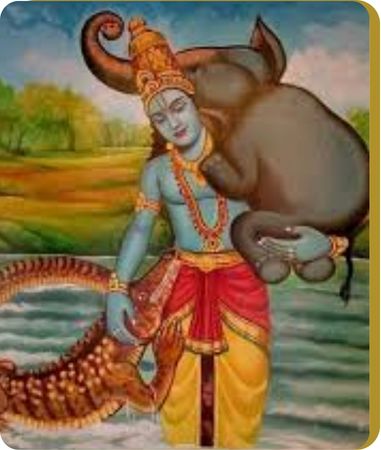
When we loosen our grip on others, we do not become indifferent — we become freer. We allow relationships to breathe. In doing so, we free ourselves — and we free them too.
On a broader level, releasing expectations helps us surrender to the flow of life itself: to notice the quiet joys already present, instead of constantly wishing things were different. This shift brings a subtle harmony to our days.
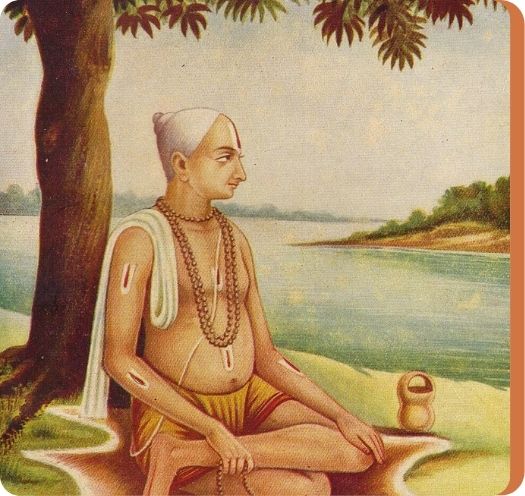
As Tulsidas ji writes in the Ram Charit Manas:
सुख जीवन सब कोउ चहत,
सुख जीवन हरि हाय।
तुलसी दाता माँगनेउ,
देखिअत अबुध अनाथ॥
Everyone seeks happiness in life. But happiness rests in the hands of the Divine.
To Tulsidas, both the giver and the seeker appear ignorant in pride, and orphaned in spirit— knocking at the door of the temporary, while forgetting their eternal Source.
Reflection Question
Is there an expectation you once held in a relationship that you have since released? How did letting go affect your inner peace?
Sources
- Drutakarma Dasa – “Gajendra the Elephant — Breaking Open the Jaws of Death”
- Divya Srinivasan – Gajendra’s surrender
- Suresh Natarajan – The Story of Gajendra Moksham
- Sant Maskeen ji – Reflections on Sukh–Dukh
- Tulsidas Dohavali (translations via Rekhta)
 The Sabad Project - Wisdom stories
Leave a comment