

What do we do when our expectations of others are not met?
And what if disappointment is accompanied by disrespect and a sense of injustice?
A story from Sau Sākhi — literally meaning One Hundred Narratives — offers clarity for moments when the mind is clouded by hurt, anxiety, and unmet expectations.
The Ascetic

A tapasvī lived in the forest. He spent his days in meditation and had taken a vow of contentment. He lived in a small hut near a town. Whatever the townspeople gave him — little or much, tasty or tasteless — he accepted with equanimity. Grain or flour, milk or curd, leafy greens or plain food — he received all of it as the Divine’s gift and ate with contentment.
Through the discipline of breath — prāṇa and apāna — he steadied his inner energies.
With continued meditation, he had developed a deep stillness of mind.
As his presence grew steady and luminous, people began to call him Jwālā — one aflame with tapas.

When Food Didn’t Arrive

Once, however, no food reached the tapasvi for seven days. He reflected:
“Perhaps the Creator is displeased with me. I have been given hands and feet, yet I make no effort of my own. One must take responsibility for sustaining one’s body.”
He further thought, “Even the gods would be unhappy to give to one who sits idle.”
So he decided to go into the city and seek alms directly.
Decorum of Alms-Seeking
With this thought, he prepared himself to set out. He took up his staff, patched cloak, water gourd, kusa-grass mat, and prayer beads. He followed a strict decorum while seeking alms:
- Never enter a householder’s home without the ascetic attire. If the householder does not recognize him, he should not incur the fault of showing disrespect to an ascetic.
- Never beg for alms more than once a day.
- Do not wear a different attire.
- As far as possible, ask only for milk.
- Accept whatever is given, without complaint.
- Do not linger for long.
- Do not accept cooked food, for it involves the labour of others, often women and children.

The Merchant’s Feast

The tapasvī entered the town. At the house of a wealthy merchant, a grand feast was underway.
A large crowd had gathered. People were welcomed warmly, pulled by the hand, seated with respect, and served generously.
The tapasvī too arrived and stood quietly to one side.
No one noticed him. No one invited him to sit. No food was offered. True to his vow, he remained standing apart.
When night fell and the gathering dispersed, the tapasvī returned to his hut.
The Messengers
At midnight, two divine messengers appeared, torches blazing in their hands. They called out to the tapasvī.
“Get up — we have been sent by the gods. The command is this: burn down the house of that merchant. A great tapasvī returned hungry; even his robe was not honoured.
They continued, “That merchant is a great sinner. We will help you. Step forward, and show us the house where you were turned away.”


The tapasvī rose and went along with them, saying, “Give me one torch as well.”
When they handed him a torch, he turned it toward the messengers themselves.
As they fled, the tapasvī said,
“You wanted me to show you the door I waited at. That door is the Divine.”
Disrespect and injustice
The tapasvī continued,
“He is the Inner Knower — the One who sustains every being. That He would bear ill will toward me is not possible. Jagannath, the Master of the world, is the Creator and the Doer of all actions.
He inspired me to go and seek alms, and so I went. Only if He had inspired the city merchant would food have been given. What power does the merchant have of his own?”
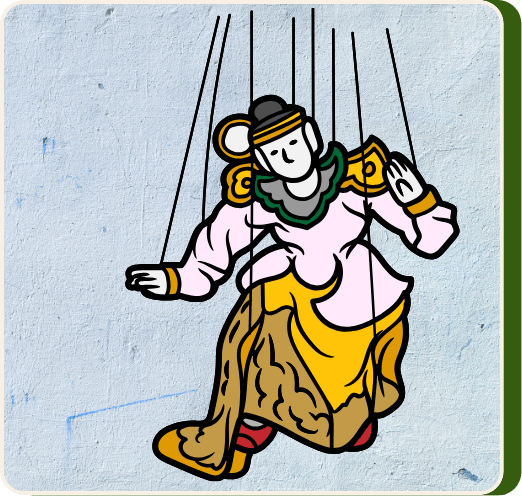

“We are all under the sway of māyā — this is the human condition. Retaliation of this kind is not appropriate.”
This insight is captured in the following verse:
किआ वेचारा जंतु जा आपि भुलाइआ
What is a helpless being to do, if the Divine itself has caused the forgetfulness?
– Guru Granth Sahib Ang 707
Hearing this, the divine messengers bowed their heads and departed. They reported to the Divine that the ascetic was truly absorbed only in the One. By the Divine’s command, a celestial chariot was sent to welcome him, and he was taken to the Divine home.
Wisdom for Living
Wisdom stories teach through narrative and symbolism. They draw on imagery — ascetics, divine messengers, and celestial realms — that was widely understood in the cultural world of the time, across spiritual paths.
The heart of the teaching, however, is universal:
- Act, without claiming doership
- Engage with the world, while anchoring faith in the Divine
- Recognize that everyone is bound by the human condition — flaws and suffering are part of being human
- Avoid blame; choose compassion over judgement

Reflection question
Can you try this stance for a day — shifting your expectations from the door of the merchant outside to the Merchant within? What changes do you notice in your actions and feelings?
References
- Sau Sākhi, Piara Singh Padam
- Do Dīwē, Ik Jyotī, Jaswant Singh Parwana
Image credit
Teacher’s order, Nicholas Roerich
 The Sabad Project - Wisdom stories
Leave a comment