
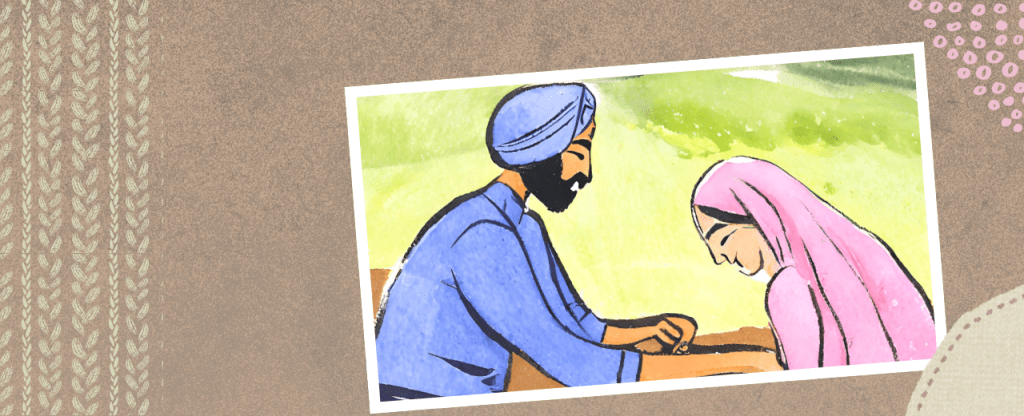
If something goes wrong, and instead of getting upset, the person next to you forgives and encourages you—how does that feel?
Have you similarly forgiven someone for a mistake?
This story about a good-natured couple from Punjab reminds us to hold life lightly and meet it with acceptance.
Living in Harmony
This story comes from a village near Ludhiana called Mullanpur. A couple lived there, Nihal Singh and Nihal Kaur, who worked hard on their small farm. Their life was filled with grace. They were content with what they had. They never quarreled. Whenever one suggested something, the other happily agreed. Their home was a place of harmony and trust.
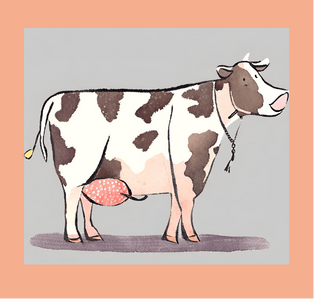
One day, Nihal Kaur suggested they sell their cow. “There’s a livestock market in the next village. It should easily fetch us a hundred rupees,” she said. Nihal Singh agreed. Early next morning, he set out with the cow, hopeful of making a good deal.
The Unsuccessful Sale
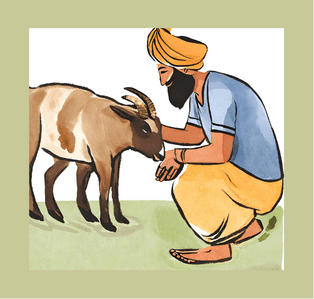
At the market, many people inspected the cow. Some said it didn’t give enough milk, others thought it was too old. No one offered to buy her. Disappointed, Nihal Singh turned back home. On the way, he met a man with a goat. The goat’s bleating and lively walk caught his attention. “Would you like to exchange your goat for this cow?” he asked. The man readily agreed.
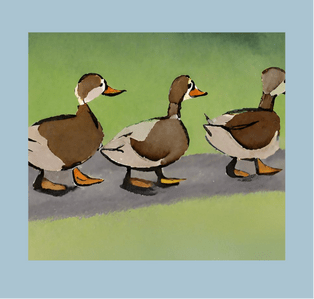
A little further on, Nihal Singh saw a woman with ducks. Their quacking filled the air with joy. Delighted, he offered, “Shall we exchange one of your ducks for this goat?” She agreed at once, and he walked on carrying the duck in his arms.
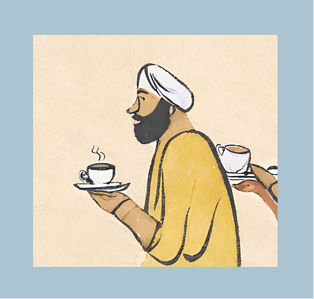
As he continued walking down the road, he met a farmer with hens. He traded the duck for a hen. By now, Nihal Singh was tired and hungry. He reached the Daankhia bus stand, and saw a tea stall nearby. He approached the stall owner and asked, “Will you exchange a cup of tea and an egg for this hen?” The man agreed.
The Surprised Bystander
A customer sitting nearby overheard and couldn’t believe his ears. “Have you stolen that hen? Why would anyone give it away for just a cup of tea and an egg?”
Nihal Singh laughed and explained the whole chain of trades, starting from the cow. The man shook his head in disbelief. “Your wife will be furious when she hears this. She’ll scold you for being so foolish!”
But Nihal Singh only chuckled. “My wife? She’s a gentle soul. She has never taken offense at anything I’ve done.”
The man was still skeptical. “Impossible. No woman would accept such a thing.” He then proposed a wager: “If your wife doesn’t scold you and accepts your story as it is, I’ll give you 100 rupees. But if she does, you’ll have to pay me.” Nihal Singh agreed, and the two of them walked home together.
The Test at Home
When they reached home, Nihal Singh said to the bystander,
“Wait outside and listen in. That way you’ll know she isn’t pretending because of you.”
Inside, Nihal Kaur greeted him warmly.
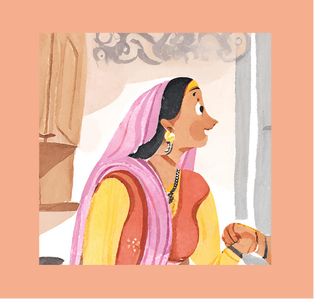
“Why are you so late today?” she asked.
“I couldn’t find any buyers for the cow at the market,” said Nihal Singh.
“No problem,” she replied calmly. “If you couldn’t get a fair deal, you should have just brought the cow back home.”
“But as I was returning, I met a goat herder,” Nihal Singh continued. “I exchanged the cow for his goat.”
“That’s wonderful!” said Nihal Kaur with delight. “A goat is easier to care for, and we can still serve milk tea to guests. Where’s the goat?”
“On the way, I met a woman with a duck,” he explained. “I traded the goat for the duck.”
Her smile widened. “How lovely! There’s a pond near our house where it can swim. Where is the duck now?”
“Then I met a farmer with hens,” Nihal Singh said. “I exchanged the duck for a hen.”
“That’s even better!” Nihal Kaur exclaimed. “The duck would have made the house messy with its muddy feet. A hen sits quietly and is so useful. Where’s the hen?”
“By that time, I was very tired,” Nihal Singh admitted. “At a tea stall, I exchanged the hen for a cup of tea and an egg.”
Nihal Kaur beamed with contentment.
“What could be better than filling your stomach when you are weary? I’m just glad you rested and came home safely.”
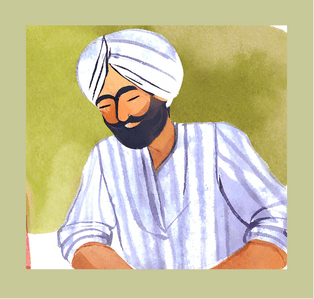
The bystander outside was astonished. Finally, he called out, “Sardarji, here is your hundred rupees. I am leaving. You were right. May you be blessed”
So, although Nihal Singh couldn’t sell the cow at the market, he eventually received the Rs. 100 in exchange for it. A gentle reminder that when the heart is clean, even a loss turns into a gift. The transaction was salvaged, the tea and egg were a bonus, and the journey itself became a beautiful story in his life.
What It Means for Us
This tale may sound too simple to be true. But in a humorous way, it illustrates a deeper truth: life becomes lighter when we cultivate acceptance.

- Acceptance of situations beyond our control.
- Acceptance of outcomes, knowing we can control only our effort.
- Acceptance of the limitations of our loved ones—and our own.
- Acceptance that change takes time, and kindness works better than harsh criticism.
Brahmakumari Sister Shivani suggests a small practice: try observing one day as a “no complaints” day. Instead of finding faults, focus only on what can be done. Notice the energy it saves and the peace it brings.
Source: Adapted from Harbhajan Singh Ji’s Bhajan Bandagi Da Partap (p.288)
Reflection Questions
Can you remember a time when accepting what happened helped you more than worrying or complaining would have?


 The Sabad Project - Wisdom stories
Leave a comment