
Which personal qualities do you take pride in?
And how do you feel about those who don’t seem to share those same qualities?
We often talk about the dangers of pride in wealth or success — but what about pride in our virtues? Can that be harmful?
A Tale from the Street: The Donkey and the Idol
There is an old parable about a sculptor and his donkey.
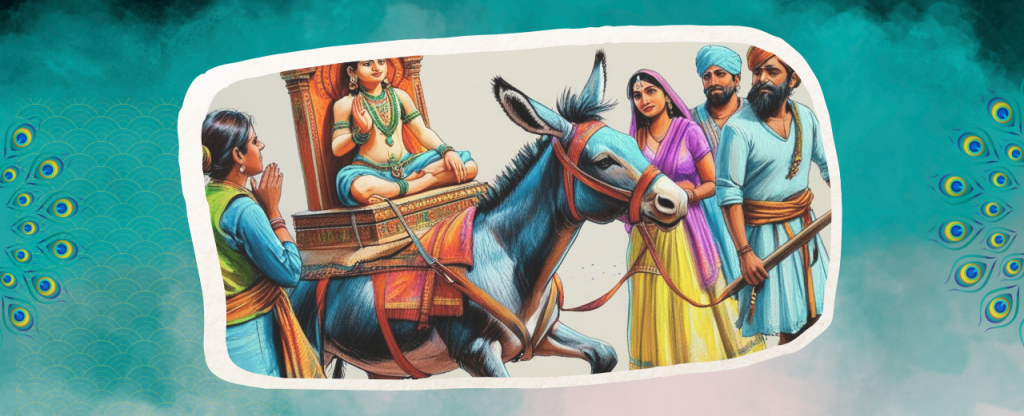
One day, the sculptor received a special order — to carve an idol of a deity. He poured days of effort into creating it, and when it was ready, he placed the idol on the donkey’s back to deliver it to the patron.
As they walked through the village, people gathered to admire the idol. Some stopped to take a closer look. Others bowed in reverence.
The donkey, seeing all the attention, began to bray proudly. It thought the crowd had gathered in its honour! It stopped mid-way, reluctant to move on — basking in what it believed was admiration for itself.
Eventually, the sculptor had to lift the idol off the donkey and carry it on his head to complete the journey.
Only then did the donkey realise: the crowd was never bowing to him. They were bowing to the sacred idol he carried.
Pride in Virtue
This light-hearted story holds a mirror to our own minds. Like the donkey, we may confuse the admiration we receive as praise for ourselves — forgetting that the qualities or virtues others admire are not ours to begin with.
They are reflections of something deeper — attributes of the Divine, temporarily expressed through us.
Pride in wealth or power is easy to spot. But pride in moral or spiritual virtues often goes unnoticed — and is sometimes even encouraged.
In many spiritual traditions, this subtle pride is considered even more dangerous. Why? Because it hides behind goodness. When one does wrong, one is very careful because of the awareness of the wrongdoing. But a person doing good naturally starts feeling pride in their goodness, and doesn’t realize when pride transforms into arrogance.
It’s like white darkness — a fog. When you’re pitch black, you know you can’t see. But in a fog, you think you can see — and that’s what makes it risky.
The Dangers of “Virtuous Pride”
But what’s wrong with feeling proud of our good qualities? Isn’t it a good reminder to cultivate good qualities in ourselves and others? Here are a few problems with pride:
- We start judging others who don’t match our standards.
- We stop seeing their goodness, and become less empathetic.
- We often overestimate our willpower, forgetting how deeply we are shaped by our upbringing, relationships, and environment.
- We cling to our current strengths and become resistant to further growth. As pride deepens, it narrows our perspective — making us less open to other views and more vulnerable to vices like anger, envy, and attachment to our past achievements.
- We also tend to forget that we’re fallible — even in areas where we feel most competent. Environments are constantly changing. As Paulo Coelho reminds us in Manual of the Warrior of Light:
“When a beginner knows what he needs, he proves more intelligent than an absent-minded sage.”
In truth, our virtues are not fixed possessions. They are not personal trophies. They are gifts — given, sustained, and taken away — by the rhythm of the Divine.
The Antidote to Pride
In Sant Gatha, Prem Singh Major quotes a conversation between two spiritual teachers on how to stay humble in the face of praise. Here are some insights from that exchange:

- Remember the transient nature of all achievements.
- Practice equanimity in praise and criticism. If praise uplifts us, criticism will crush us.
- Recognize that virtues are Divine attributes — not our personal possessions. They exist in all beings to different degrees.
- Reduce self-reference. Consciously speak less of “I,” and more of “That which flows through me.”
Words of Wisdom to Remember
Here’s a verse worth holding close the next time you feel yourself getting carried away by praise or pride:
Je koee kise da maan karenda, so maan Prabhu ke bal kee.
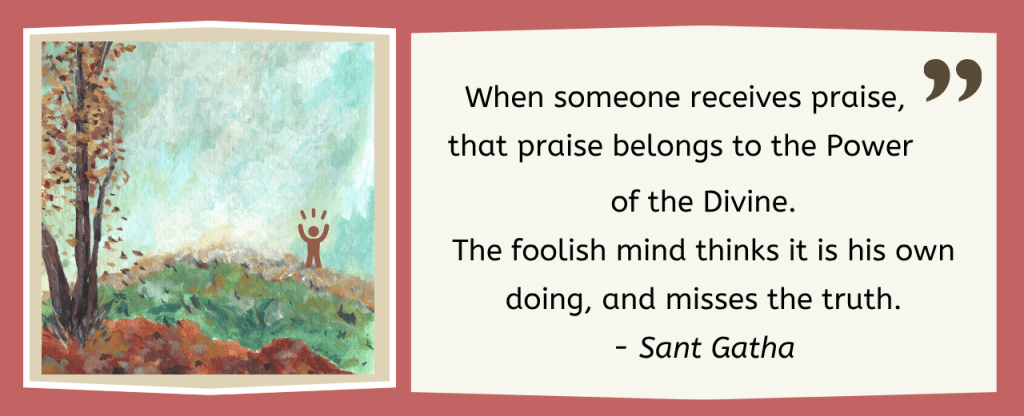
When someone receives praise, that praise belongs to the Power of the Divine.
Moorakh man aapni kar maane, samjhe na baat asal kee.
The foolish mind thinks it is his own doing, and misses the truth.
Gun augun kee shakat jo paaee, so shakat hai Raam atal kee.
The ability to hold virtue or vice — that too comes from the Eternal One, Ram.
Karmaan kee maan jo apni maane, tis hoe sajaaye azal kee.
One who takes pride in the gifts of grace will face the highest punishment.
— Quoted in Sant Gatha, Volume 2, by Prem Singh Major
Reflection Question
What helps you stay grounded when praised for your qualities?
How do you remind yourself that what flows through you is not yours, but gifted?
Sources:
- Sant Gatha, Prem Singh Major, Volume 2
- Paulo Coelho, Manual of the warrior of light
- Story Planets – The Donkey and the Sculptor


 The Sabad Project - Wisdom stories
Leave a comment