
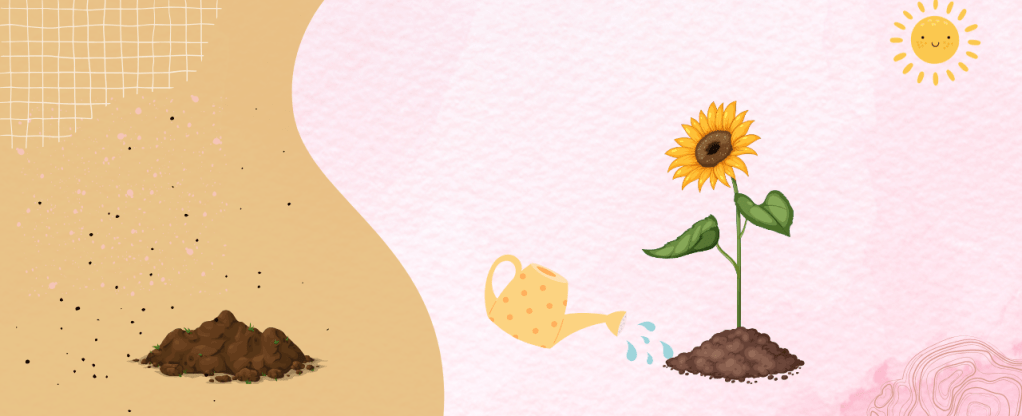
Is there a friendship or relationship that you were very fond of in the start, but have sweet-sour tones now? Or someone you continue to love deeply, but some days, just being around them feels difficult? Relationships go through ups and downs, and the ones that weather the storms become our strongest support in the sea of existence. Zen master, Thich Nhat Hanh, shows us how we can look at our relationships through the lens of nature.
Not a brick in the mansion of life
We seek permanence in the things we enjoy, the relationships we cherish, the materials we own. We often see our relationships in a similar way. Something we own, and expect to remain in our possession exactly the way they were in the beginning.
We almost see them like the bricks we stack to build the mansion of our life. Something we acquire once, place them in a certain order, and expect them to remain there – unchanging. The reality of relationships is different. More than the bricks of our mansion, they are like flowers we plant in the garden of the heart. And like any living thing, they need to be nurtured with love, attention, and kindness.
Nature teaches us a very important lesson through its ever changing cycles. The clouds keep changing form, and eventually fall on the soil in the form of rain. This water nurtures life on earth. Dead leaves and flowers return to the earth to become a rich source of nutrition for new life.
The changing weather and seasons
Like the clouds in the sky, the formations of people, circumstances and feelings keep changing all the time. Our feelings like anger, sadness, joy, love keep changing. The emotions we experience in our relationships go through similar changes.
We became great friends with someone we didn’t like at first. And sometimes, unfortunately, what started with deep love can transform into shades of mistrust, disappointment, grief, even hatred. Like the clouds in the sky, these moments come and go. Every relationship has positive and negative experiences. But when the difficult moments start outweighing the joyful ones, it is time to take a pause and look within our heart.

Learning from nature
Thich Nhat Hanh shows us a different lens to look at the challenging moments in our relationships. They are not dead matter, but compost for new growth. Love can change to hatred, and the good news is that hatred can be transformed into love as well.
“Many of us begin a relationship with great love, very intense love. So intense that we believe that, without our partner, we cannot survive. Yet if we do not practice mindfulness, it takes only one or two years for our love to be transformed into hatred. Then, in our partner’s presence we have the opposite feeling, we feel terrible. It becomes impossible to live together anymore…love has been transformed into hatred; our flower has become garbage.
If you see elements of garbage in you, such as fear, despair, and hatred, don’t panic. As a good organic gardener, a good practitioner, you can face this: “I recognize that there is garbage in me. I am going to transform this garbage into nourishing compost that can make love reappear.”




How can we make love reappear
So what do we do when love has withered and despair has set in? Thay reminds us: anger or sadness doesn’t mean we’ve lost the capacity to love. Love is part of who we are—it just needs tending.
Like a wilted plant that perks up with water and sunlight, relationships can come back to life with attention and care. Communication, understanding, compassion, and forgiveness—these are powerful tools. Stronger than anger, and always within reach. When we offer them mindfully and unconditionally, something begins to shift. Healing becomes possible.
When you need to move ahead
Some relationships, at certain points, may no longer support the well-being of either person. When wisdom calls for distance—or even separation—it doesn’t mean we’ve failed. It simply means we’re honoring what is real in the present moment.
Even when we grow apart, it is important to hold the powers of love – forgiveness and understanding. Holding pain keeps us captive in the cage of our own memories. Choosing to forgive sets us free. Returning to the garden metaphor: a wise gardener clears away what is no longer alive—not to discard it with resentment, but to turn it into compost. That compost nourishes the soil, making way for new life to bloom.
In the same way, compassion and forgiveness can help us let go with love—and make space for healthier relationships to grow.
References:
Thich Nhat Hanh, Taming the tiger within: meditations on transforming difficult emotions.
Reflect:
Is there a relationship in your life where anger or irritation shows up more often than you’d like? What would it mean to tend to this bond as a mindful gardener? Which tools feel most accessible to you right now—understanding, honest communication, compassion, or forgiveness?


 The Sabad Project - Wisdom stories
Leave a reply to Gurpreet Sethy Cancel reply