
One of the most common ways we measure success today is by how much money we earn. Whether it’s a paycheck, business revenue, or even a country’s economic growth, we often ask: “How much more have we made this year?”
The lure of growing wealth also brings with it the pressure to make compromises. Have you heard statements like these before:
🔹 “You have to be a little street-smart.”
🔹 “Sometimes you just have to look the other way.”
🔹 “At the end of the day, money is money—it has no color.”
But does money really have no color? Let’s explore this through a story from the life of Guru Nanak.
The Grand Feast
Guru Nanak, the first Guru of the Sikhs, traveled far and wide with his companion Bhai Mardana, spreading wisdom. Their journeys took them through mountains, dense forests, and flooded rivers, often lasting months.
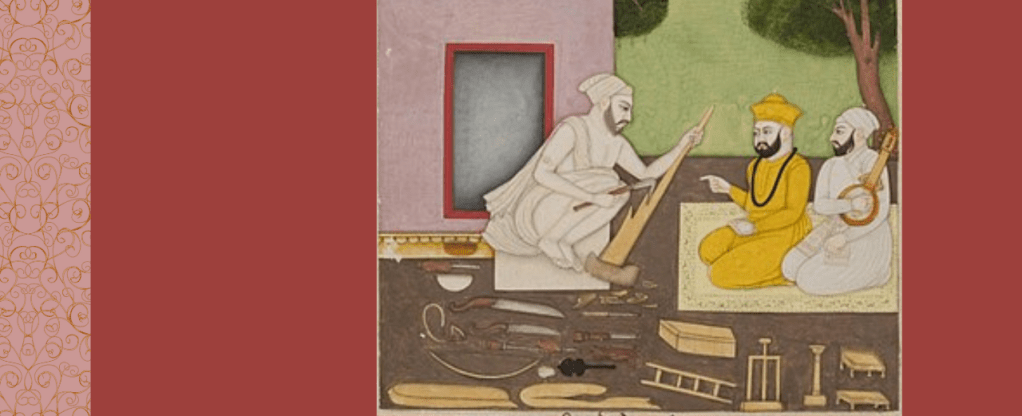
One day, they arrived in the town of Saidpur, where they met Bhai Lalo, a humble carpenter. He lived in a simple hut with his wife, earning an honest living through hard work. When Bhai Lalo heard that Guru Nanak had arrived, he was overjoyed and welcomed him into his home. Though he had little to offer—just dry rotis—he prepared a meal with deep love and respect.
Meanwhile, in the same town, a high-ranking official named Malik Bhago was hosting a grand feast. It was a lavish affair, with an extravagant spread of food, meant to impress both the rich and the spiritual elite. When Malik Bhago’s messengers heard that Guru Nanak was staying at the house of a lowly carpenter instead of attending the feast, they were surprised. They insisted that he come, saying, “All the holy people have been invited to the event. You should also be there.”
Guru Nanak politely declined.
Malik Bhago was furious when he heard this. No one had ever refused his invitation before. He sent his men to summon Guru Nanak, demanding an explanation. Guru Nanak went along with Bhai Lalo.
When questioned, Guru Nanak simply said, “I cannot eat this food.”
Malik Bhago, now even more insulted, scoffed, “Why? What is so special about the dry bread of a poor carpenter that you reject my feast?”
Guru Nanak replied, “This food carries the suffering of those you have oppressed to amass your wealth.”
Malik Bhago couldn’t bear this insult, “And you don’t see that in Bhai Lalo’s food?”, he asked.
Guru Nanak explained, “His bread is earned through honest labor and gratitude to the Creator. It is like milk for the seeker’s soul.”
No one had ever spoken to Malik Bhago like this before. He looked around at the gathering—the cooks who had prepared the meal, the officials who carried out his orders, and the guests who had come to show their allegiance. For the first time, he saw beyond the grandeur. He noticed the fear, anger and aversion in the eyes of those who served him. In contrast, he noticed that Bhai Lalo, despite being of limited means, radiated peace and kindness. For the first time, Malik Bhago began to feel the weight of his own actions.
The Choices We Make
Money is essential—it provides for our needs, comforts, and the well-being of our families. It sustains businesses, supports welfare, and drives governance. But in the pursuit of wealth, we all face difficult choices: ideals vs. practicality, integrity vs. shortcuts.
These choices shape how we treat people, use resources, and care for the environment. They influence our relationships—with ourselves, our families, partners, customers, and local communities.
Each of us walks a different path. Our circumstances and choices may differ, but the wisdom of those who have walked before us can be a guiding light—reminding us not just to seek wealth, but to consider where it comes from. And to keep striving toward right actions, right words, and right livelihood.
Bhai Lalo continued to live a life of honest labor and devotion. It is believed that after the visit of Guru Nanak, Bhai Lalo’s home became a place where seekers would gather to listen to the Guru’s wisdom. The place is now a gurdwara in the present day town of Eminabad. His life serves as an enduring example of dignity in honest work and spiritual fulfillment through ethical living.
संतन का दाना रूखा सो सरब निधान ॥
Santan ka daana rookha so sarab nidhaan||
The dry bread of the Saints is equal to all treasures.
गृहि साकत छतीह प्रकार ते बिखू समान ॥
griha saakat chhateeh prakaar te bikhoo samaan ||
The thirty-six tasty dishes of the worshipper of Maya, are just like poison. ||
Guru Granth Sahib, Ang 811
Audio comment – Bhikku Aruno

Listen to an audio comment from Bhikkhu Aruno. Bhikkhu Aruno is an Indian-Thai Buddhist monk ordained in the Dhammayut tradition, closely following the Forest monastic practices of Ajahn Mun.
Sources
- Dr. Kirpal Singh, Janamsakhi tradition – An analytical study
- Sarbpreet Singh – Story of the Sikhs
- Discover Sikhism – Malik Bhago
- Image credit: Wikipedia
Reflection question
Has there been a time when you chose the harder path instead of an easy gain? What helped you make that choice?
 The Sabad Project - Wisdom stories
Leave a comment