
Have you ever felt that you put in a lot of effort—but the result did not match what you hoped for? Or that your hard work did not bring the outcome you expected?
What helps us stay steady when life does not go as we expect? The Ramayana offers profound insights on how to live through such ups and downs with resilience and grace.
The Interacting Forces in Our Life

Sadguru Aniruddha Bapu offers a beautiful way to understand why we feel pain and dissatisfaction. He explains that three forces of life-energy are always working together within us:
Trupti – Satisfaction or contentment
Trisha / Kshudha – Hunger or need
Kriya – Effort or action to fulfil that need
This “hunger” can take many forms—not only for food, but also for air, security, respect, achievement, or wealth.
Need → Activity → Satisfaction
- We need air → we breathe → oxygen reaches our body
- We feel hungry → we eat → we feel nourished
- We need money → we work → we earn
When this natural cycle flows smoothly, life feels balanced. But there are times when we take action and yet do not receive the expected result. When effort does not lead to satisfaction, pain arises. Much of our everyday suffering as human beings comes from this gap.
The Sita and Rama Within Us
Aniruddha Bapu invites us to reflect on the Ramayana not only as a historical epic, but as a living story that plays out continuously within our own minds.
In this inner Ramayana:
- Ram ji represents Purusharth (the power of sincere effort)
- Sita ji represents Trupti (contentment)
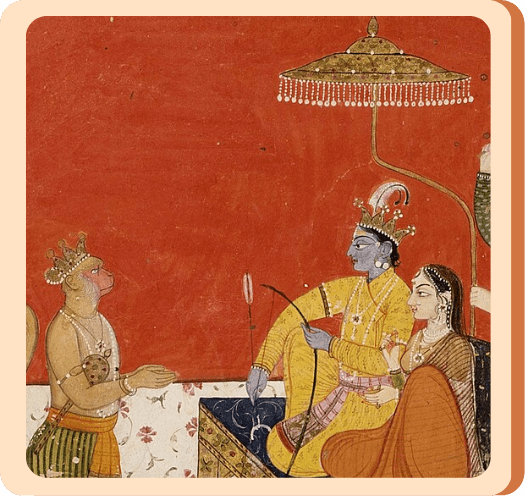
When Ram and Sita live together, life is in harmony—effort and satisfaction support each other. But when they are separated, imbalance arises. This separation happens when our effort (Purusharth) is cut off from contentment (Trupti). In the story, Ravana abducts Sita. In our own lives, something similar happens within. Without contentment, it becomes harder to put efforts.
How Does Ravana Enter Our Mind?
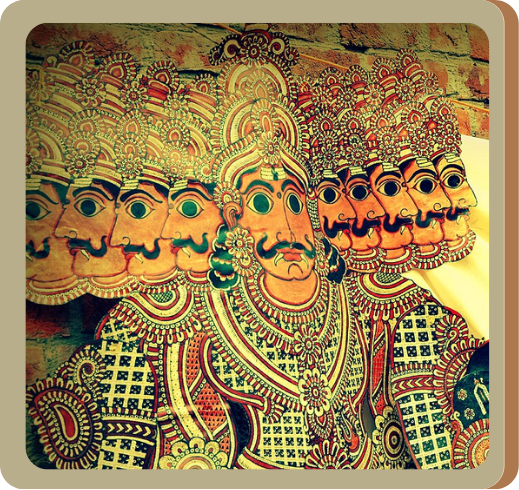
Aniruddha Bapu reminds us that there is a Ravana within our own mind—and unknowingly, we keep feeding it. This inner Ravana slowly carries Sita, our contentment, away from us. That Ravana is discontentment, and the mother of this discontentment is comparison. Interestingly, in the Ramayana, Ravana’s mother is Kaikasi—a name that also signifies dissatisfaction.
Comparison gives birth to fear, insecurity, and restlessness. This inner Ravana separates Ram and Sita within us—it separates our effort from our contentment, quietly destroying our inner harmony.
A student who is rested and contented can write an exam with clarity. A mind at peace has the energy to move steadily toward its goals. But when contentment is missing, our inner strength weakens — like trying to fill a bucket that has many holes. No matter how much water we pour in, it keeps leaking out.

The Many Faces of Comparison
We feed the Ravana in subtle ways, often without realising that we are comparing. Here are some common forms of comparison that quietly steal our contentment:

1. Comparing Our Achievements with Others
Each one of us has a unique path and a direct connection with the Divine. Life is not a race. We may look at others for inspiration, but when we use others to decide whether we are “enough,” we drain our own energy.
2. Comparing Our Results with Our Expectations
When things don’t go according to our plans, we sometimes blame fate. Yes, life circumstances differ for everyone. Past karma may shape our starting point. But discontentment blinds us to the possibilities that still exist in our present.
3. Comparing Our Effort with Our Outcome
Our effort is only one of many forces shaping life. Results unfold across time and space. Expecting a perfect one-to-one match between effort and outcome leads to disappointment and loss of motivation. Some seeds take time to bear fruit.
4. Comparing Our Self-Image with Others’ Opinions
Seeking constant validation is another form of comparison—between how we see ourselves and how we think others see us. When our worth becomes dependent on others’ approval, our peace becomes fragile.
5. Comparing Our Present with Our Past
Looking back at what once was can also generate dissatisfaction. Life is ever-moving. Clinging to yesterday does not allow us to walk fully into today.
6. Comparing People with Our Expectations
When we measure others against our expectations, we often slip into judgement and disappointment. Dwelling on the flaws in others disturbs our own inner landscape. But when we look at others with the intention of understanding and helping, we generate hope and compassion within ourselves.

A High Ladder Needs Small Steps

Acceptance of life as it is does not mean complacence. We can and should aim high—but every ladder rises through small steps. One step gently leads to the next. When the rungs of our expectations are placed too far apart, we feel strained and frustrated instead of strengthened.
Think of a child who returns home with average grades after sincere effort. When we acknowledge and appreciate what the child has achieved, the child feels contented—and that contentment gives strength to strive higher. But when achievement is belittled, energy collapses.
Celebration fuels effort. Fear drains it.
At the same time, contentment is not indulgent inaction. If a parent says, “Don’t bother studying; we have enough money,” that is not true Trupti. That kind of false comfort breaks the natural cycle of effort and satisfaction. Like sleep after a day of work is healthy—but sleep without work disturbs the body’s rhythm.
Without rest and contentment we cannot work well; without effort, contentment loses its grounding.

What Comes First: Effort or Contentment?
We usually believe that contentment will come after we achieve our goals. But what if contentment actually comes before sustained effort?

Think of a seed buried in the soil. It may lie dormant for years until rain touches it. That rain awakens its hidden potential. In the same way, contentment is the rain that allows our inner potential to sprout.
We may have lofty goals that take years to realise. But if we live in constant anxiety and self-doubt, the journey becomes draining. When we learn to be in a quiet state of inner “blossom” even while striving, we give our dreams a far greater chance to grow.
A Deeper Root of Comparison: “Me vs You”
There is an even subtler Ravana that modern competitive life awakens within us—the belief that we must protect only our self-interest, even at the cost of others. We seek trupti only for ourselves and slowly build small fortresses around our lives.
But nature follows a very different law. Everything exists for others:
The earth nourishes the seed.
Trees offer fruits and shade.
Rain falls without discrimination.
Leaves dry, fall, and return to the soil to renew the earth.
Through this endless giving, the earth itself is renewed. In the same way, when our circle of concern widens—when we genuinely wish well for others—our own life begins to flourish in quiet, unexpected ways.

Reflection
Is there an area of your life where you would like to nurture more contentment or acceptance—so that your effort may regain its natural strength?
References
Aniruddha Bapu. Ram Raksha Stotram – Discourse 4.
 The Sabad Project - Wisdom stories
Leave a comment