
We all face different kinds of problems in our daily lives — at work, in our health, in relationships, or in other areas. But have you noticed how differently people respond to the same difficulty?
Some of us become very worried or anxious, feeling so weighed down that it becomes hard to engage with the rest of life. Others feel the issue but respond more calmly or objectively. And then there are some who appear so steady that people around them may not even realize they are going through a challenge.
So what is the real size of a problem?
And why do some people carry heavy challenges lightly, while others feel overwhelmed?
Wisdom traditions tell us: the size of the problem is often the size we give it.
A Story from the Ramayana

During the war in Lanka, Lakshman is struck by a poisonous arrow and collapses. The only cure is a rare herb—Sanjivani—found in the Dronagiri mountains. But it must be brought back before sunrise.
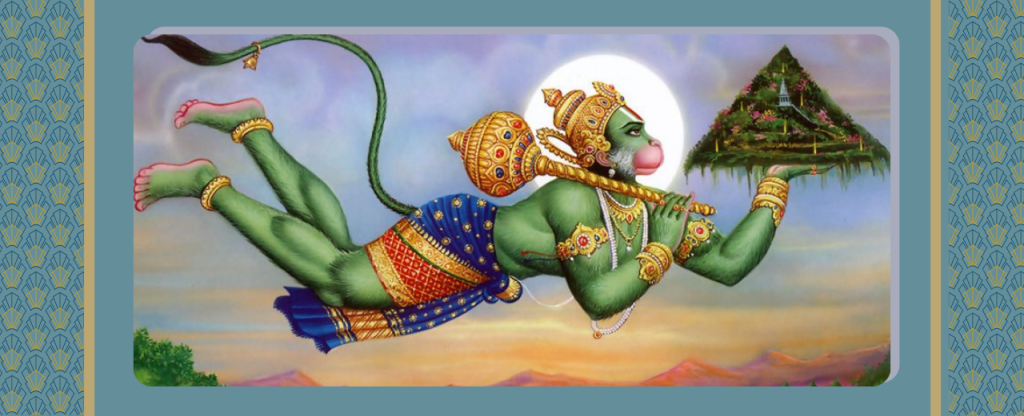
Hanuman rises to the moment. He flies across the skies, searching for the herb. When he cannot identify it in time, he lifts the entire mountain and carries it back.
This image — Hanuman soaring with a mountain in his palm — has become a powerful symbol of Divine protection. Devotees remember him for his ability to remove obstacles, making even a mountain feel like a light load in the palm of his hand.
The Relevance for Our Lives
BK Sister Shivani offers a beautiful insight connected to this story.
There was Hanuman, who carried an entire mountain effortlessly on his palm.
And then there is another mountain we all know well — the kind we create in our mind, a whole mountain made out of a mustard seed.
Our mind has the extraordinary ability to do both:
- turn a small problem into a huge mental burden, and
- turn a big problem into a small bump we can cross with ease.

Which direction the mind goes depends on our awareness and practice.
The same mind that can turn a mustard seed into a mountain… can also turn a mountain into a mustard seed — and let it go.
How does this work?
The Weather Outside, and the Weather Within

We often decide how we feel based on what is happening around us (para-sthithi).
But wisdom reminds us to anchor ourselves in the weather within (swa-sthithi).
When these two get mixed, our emotional life becomes a roller coaster — we react to every shift outside, and our inner state keeps swinging with it.
But when we separate the two, we begin to discover something powerful: it is possible to stay calm within even when there is chaos outside.
There are limits to how much we can change people or situations outside us. But there is no limit to how much we can strengthen the space within us.
Thich Nhat Hanh beautifully reminds us:
“The way out is in.”
What Makes Problems Feel Bigger
Most of us engage in negative talk—out loud or silently. Over time, this habit magnifies the problem in our mind.
Why do we do it?
- We may be seeking comfort, acceptance, or sympathy
- We learn it from others
- We hope that talking about it will bring help
- Sharing may lighten the heart temporarily
- We want others to understand our struggle


But magnifying problems rarely helps. It:
- drains the energy needed to solve them
- weakens self-belief
- and spreads negativity to those around us, who then unknowingly reinforce our own fears
As Hafiz reminds us:
“The words we speak become the house we live in.”
A Better Way to Speak About Problems
Spiritual traditions across the world use invocations, affirmations, and sacred words—not as magic, but because what we repeat becomes our inner climate.
Sankalp se siddhi — the mind’s intention shapes the outcome.
Right thinking makes a heavy problem lighter. Unhelpful thinking makes a small inconvenience feel like a mountain.
Here are gentle reminders that can help:
1. Use light words
Train yourself to describe difficulties lightly and describe strengths in detail. This softens the mind.
2. Speak positively
Not artificially—but by tuning into gratitude: the strengths within, the people who care, the parts of life that are quietly supporting us.

3. Keep perspective
Many situations that once felt painful later turned out to contain blessings—
lessons, growth, clarity, new beginnings.
You can experiment with an inner sentence:
“This has come for my benefit. Only good comes my way.”

4. Be selective about sharing problems
Talking can help, but only with people who can truly support. Excessive sharing drains energy and spreads worry.
5. Look up
Anchoring ourselves in the Divine changes the quality of our inner strength.
Thought Lab
Sister Shivani suggests a simple experiment we can try for ourselves. Think of a current challenge—health, relationships, family, work.
Now notice: Which kind of statements do you use more often? Can you slowly practice making your problem feel smaller?
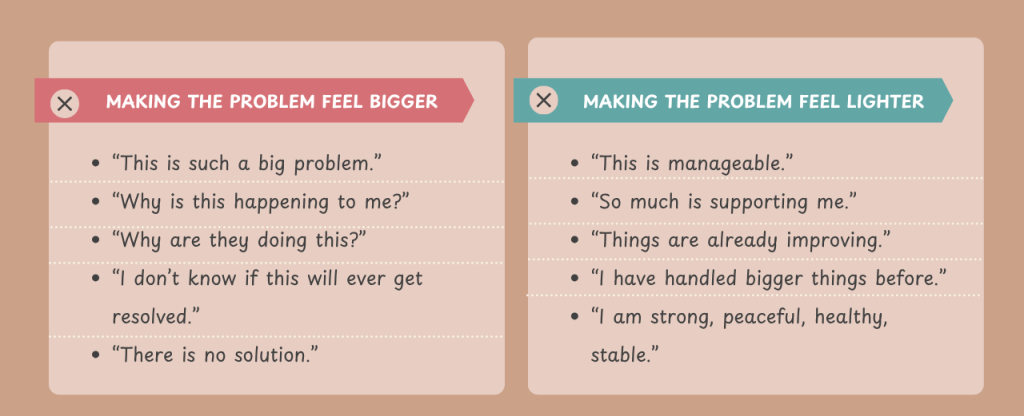
We can feel the difference these words create within us—the shift in our energy, clarity, and confidence.
With practice, we strengthen these inner habits, so that our swasthiti (inner state) stays steady in every parasthiti (outer situation).
Reflection question
- Bring to mind a problem you’re facing today. What inner statements or reminders could help shrink the problem — and expand your sense of strength?
- Have you seen someone hold a big challenge lightly, almost like a molehill? What did they say or do that made their approach different?
References
- BK Sister Shivani – How to make a big problem smaller
- BK Sister Shivani – Be careful of three things in your words
- Devdutt Pattanaik – My Hanuman Chalisa


 The Sabad Project - Wisdom stories
Leave a comment