

Are there people in your life—at home, work, or elsewhere—whose words or actions upset you? Maybe it’s something they say, how they behave, or even the way they think. These moments can leave us feeling hurt, angry, or disappointed. Worse, the words and memories can keep replaying in our mind, causing us pain long after the incident. Sacred traditions remind us that if we want a real solution, we need to look in the right place.
The Root of Conflict in Relationships
Most of our conflicts stem from unmet emotional needs — love, respect, understanding, or support. For example, when someone ignores our hard work, it’s our need for recognition that’s being denied. When someone continues to overlook our problems, it is our need for understanding and empathy that is not being met.
Spiritual traditions teach us that while we can negotiate for temporary fixes, seeking fulfillment solely from people and situations keeps us trapped in an endless cycle.
A Different Way of Looking at Life
Imagine you have a very powerful fan that gives a cool breeze on a hot summer day. It can be charged with a battery or with a direct power source. When you connect it to a battery, it runs for some time and becomes slow as the battery starts draining. If you connect it back to the main power supply, it begins to run – at the speed and ease with which it is designed to operate.
The way we have plugged our connections in relationships are similar. The input and output points seem to be reversed. Our main power source is the Divine. All the powers of the Divine, like love, compassion, courage, peace reside in us. When we tune into this power within, love and peace flows from inside us to the world. However, we are trying to receive our power from outside. We often rely on external “batteries”. We seek validation from others, social approval, respect and security from people around us. These can sustain us briefly but eventually drain out, leaving us feeling empty and dependent once again. And just like running a fan on a weak battery, this approach leaves us exhausted, battling expectations and disappointments.
Breaking the Cycle of Expectation
Brahma Kumari Sister Shivani offers a striking image of modern relationships. Two people return home after a long day, each with outstretched hands — not to give, but to receive. Each expects the other — understand me, give me respect, give me peace.
And each side is running very low on the power within, and has little they can offer to another. We live in precarious balance, and always on the brink of an emotional disturbance.
This creates an emotional gridlock. If everyone is waiting to receive, who will give? No matter how successful we are, if we approach relationships from a place of scarcity, we operate as emotional beggars, always needing, rarely giving. The way out? Change sides—move from expecting to giving.
The Image of a Deity: A New Role Model
Does this sound hard to do? Sometimes metaphors and images can be very powerful in helping us imagine a better solution. Sister Shivani gives us one such example we can draw from deities. Deities are beings who are considered to have greater powers than ordinary humans. They are believed to be endowed with special cosmic powers and are worshipped for their ability to be the giver of boons.

Source: Wikipedia, Avalokiteśvara painting from a Sanskrit palm-leaf manuscript. Nalanda, India, 12th century.
Deities are not just supernatural beings—they symbolize our highest potential. They don’t beg for blessings; they radiate abundance. They give, effortlessly. What can we learn from them?

Radiating Power: Deities are often depicted with a halo, symbolizing their connection to divine energy. They don’t seek power from the outside; they embody it. Likewise, we already have love, compassion, and strength within us—we just need to activate it.
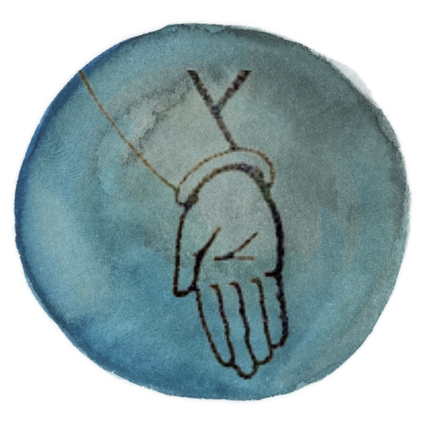
The Hand That Gives: A deity’s hand is often shown in a giving gesture. Because they are full, they have plenty to share. If we shift from expecting respect and love to offering them freely, we tap into our true power.

The Hand That Blesses: Even when people make mistakes, deities are givers of grace. Holding grudges and resentments only drains our own energy. When we forgive, we tune back into the power that resides within us. And free ourselves from emotional burdens.
The Psychology of Abundance
Modern psychology calls this shift a move from a deficit mindset to an abundance mindset. When we recognize that we are already whole, we stop seeking wholeness outside. We stop being controlled by external forces and, instead, tap into the power within.
By letting go of false expectations and reclaiming our inner abundance, we don’t just free ourselves—we inspire freedom in others as well.
The next time you feel let down, pause. Instead of asking, “Why didn’t they give me what I needed?” ask, “How can I be the source of what I seek?” In that moment, you switch from running on weak batteries to plugging into an infinite source of power. And that changes everything.
“Our happiness depends on us, on our way of responding to events, not on other people. Our suffering also depends on us. Knowing this, we no longer blame or complain; we are determined to begin anew with ourselves… Each step, each breath, and each trip gives you that chance.”
Thich Nhat Hanh
Reflection question
What is one expectation you have from someone that you can try to meet by looking within?
 The Sabad Project - Wisdom stories
Leave a comment