
Spiritual traditions have affirmed time and again the inevitability of ‘dukkha’ in life – that there are definitive causes that give rise to ‘dukkha’, that peace is possible, and that there is a path that leads to peace. In fact, in his first composition – the ‘Jap’, reverentially called the Jap Ji Sahib by the Sikhs, Guru Nanak asserts that ‘dukkha’ is also a blessing. Not a curse. Well, it is one thing that there can be a remedy for ‘dukkha’, but how can ‘dukkha’ be a blessing? Is this self-flagellation? Quite to the contrary. Here is a very revealing insight offered by Giani Pinderpal Singh ji.
‘Dukha’ is like poison. Like the venom of a snake which can kill a person. However, the ones who make anti-venom pay lacs of rupees to buy the venom of the most poisonous snakes. An experienced vaid (traditional doctor) uses the poison, crushes a mix of medicinal herbs and adds it to this venom to prepare the anti-venom. The very venom that kills, now becomes medicine that saves lives.
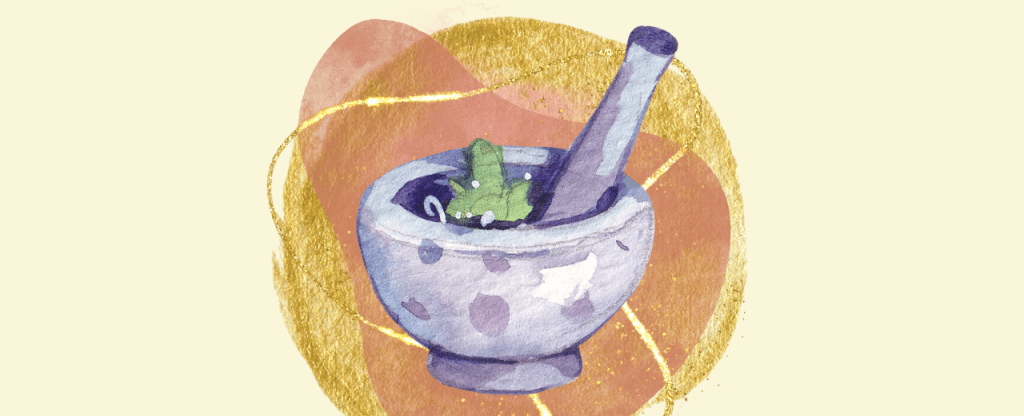
Guru Nanak describes a similar process that can be used to transform pain. He suggests that ‘Dukkha’ is like poison, and asks us to add to it the medicine of Naam (identification with the Universal Creator). When this mixture is ground on the mortar of contentment using the pestle of good deeds, it transmutes the poison to medicine. If you take such a medicine regularly, you will not waste away due to the vicissitudes of life. Furthermore, Guru Nanak guarantees that you will win the ultimate battle – overcoming the fear of death and breaking free from the cycles of pleasure and pain.
दुख महुरा मारण हरि नामु ॥
dhukh mahuraa maaran har naam ||
Pain is poison. The Lord’s Name is the antidote.
सिला संतोख पीसणु हथि दानु ॥
silaa sa(n)tokh peesan hath dhaan ||
Grind it up in the mortar of contentment, with the pestle of charitable giving.
नित नित लेहु न छीजै देह ॥
nit nit leh na chheejai dheh ||
Take it each and every day, and your body shall not waste away.
अंत कालि जमु मारै ठेह ॥१॥
a(n)t kaal jam maarai Theh ||1||
At the very last instant, you shall strike down the Messenger of Death. ||1||
ऐसा दारू खाहि गवार ॥
aaisaa dhaaroo khaeh gavaar ||
So take such medicine, O fool,
जितु खाधै तेरे जाहि विकार ॥१॥ रहाउ ॥
jit khaadhai tere jaeh vikaar ||1|| rahaau ||
by which your corruption shall be taken away. ||1||Pause||
(Source: Guru Nanak Dev Ji, Sri Guru Granth Sahib Ji | Ang 1256)
The metaphors of the mortar and pestle here are very insightful. The mortar is made of a heavy stone that doesn’t move with repeated strikes – something that contentment does to a human being. If you are not afraid of having less, losing, and learning to be grateful no matter what the circumstances are, they stop shaking you. This kind of a mortar is necessary for holding together what comes your way. It is only after you hold the contents of life in this container can you start the work of the ‘transmutation’. The pestle used for this transmutation is good deeds and thoughts. Like Alcyone suggests “constant activity in good work.” We cannot control the situations that come into our life, but what we can influence is our actions and thoughts in that situation. It also reminds us that there is always something we can offer to the world. We must always be on the lookout for what we can do to make the lives of people around us better. Charitable activities in the form of money pale in comparison to thoughtful words and actions offered to the person right next to you. It could be kind guidance to someone who is struggling in a new role, or offering to make dinner when your partner is harried at work. But none of this will be of any use, till we identify with Naam (Universal consciousness). Identification with the ego is considered to be the root disease of the mind and the cause of all our pain. Even actions done for the betterment of self, or others, but out of a sense of “I am doing it ” bring new ‘dukkha’ into life. This poison can be transformed into life saving medicine when we mix into it the medicine of Naam (identification with Universal consciousness). More on “Naam” in the upcoming series.
References:
- Katha by Giani Pinderpal Singh ji
- Translation of Gurbani at Sikhi to the max
- Alcyone, At the feet of the Master
 The Sabad Project - Wisdom stories
Leave a comment